
Sumo Deadlift High Pull
A wide-stance barbell lift linking leg and hip drive with an elbows-out high pull for power, coordination and conditioning.

Setup
- Place the bar over your midfoot on a level, clear lifting surface. Secure any plates with collars.
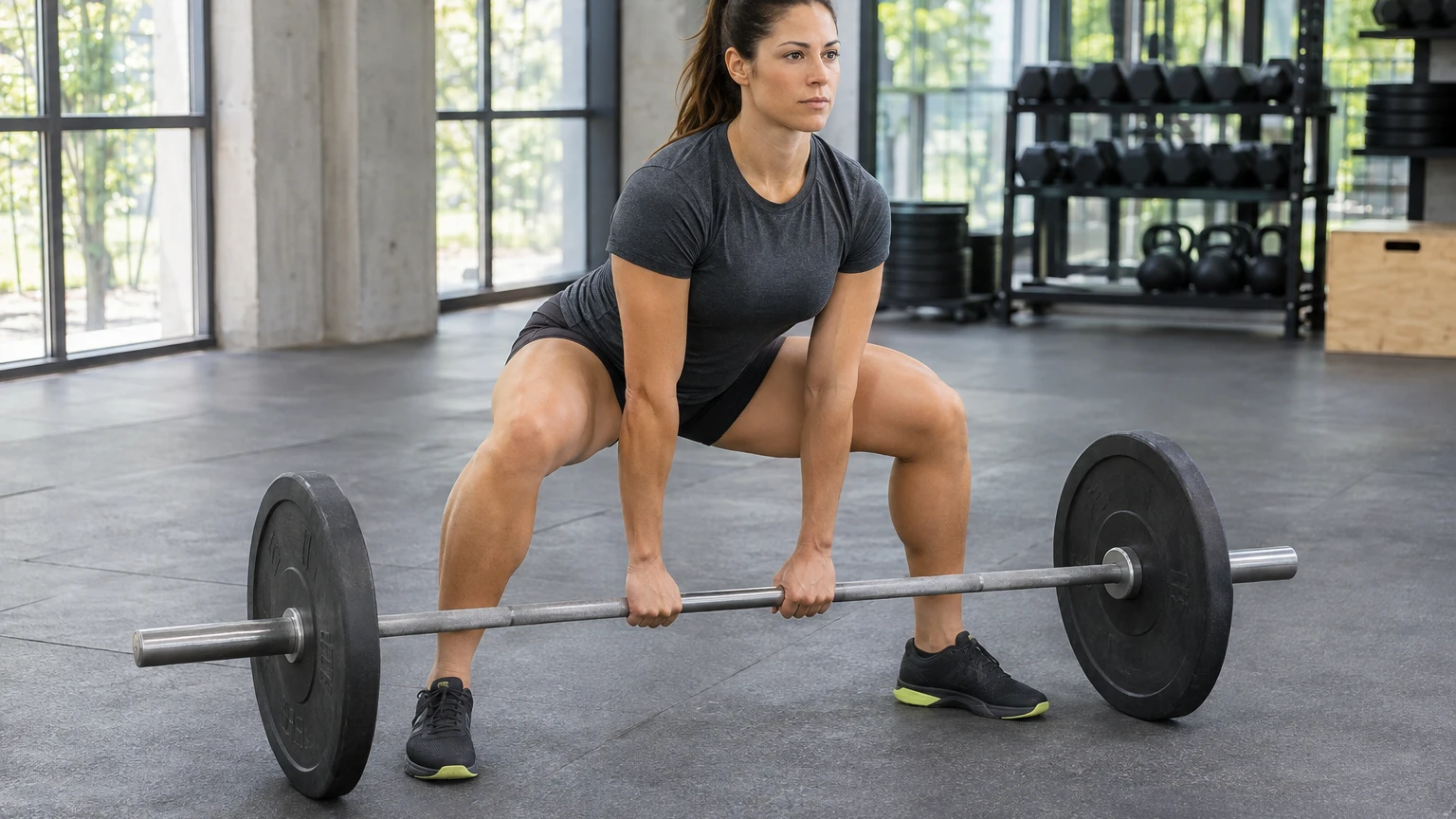
- Stand wider than shoulder width, with toes turned out enough for your knees to track in the same direction. Avoid forcing an excessively wide stance.
- Bend your knees and hinge at the hips to take a narrow overhand grip inside your legs, leaving clearance for your hands and knees.
- Brace your trunk, keep your arms straight and set your shoulders slightly ahead of the bar with your whole foot grounded.
Execution
- Push the floor away to lift the bar, keeping it close as your hips and shoulders rise together.
- As the bar passes your knees, extend your hips and knees forcefully to stand tall without leaning backwards.
- Let that upward drive initiate a shrug, then bend your elbows out and upwards to guide the bar towards your collarbones.
- Keep the bar close and the finish controlled; do not force extra height through your shoulders or wrists.
- Lower the bar by straightening your arms first, then hinge and bend your knees to return it to the floor.
- Allow the bar to settle, re-brace and reset your position before the next repetition.
Coaching cues
- Legs and hips first; arms follow.
- Keep the bar close to your shirt.
- Stand tall rather than leaning back.
- Elbows travel out and up; hands guide the bar.
- Reset every rep before adding speed.
Common faults & fixes
- Pulling with bent arms from the floor: reduce the load and practise straight-arm sumo deadlifts before adding the shrug and high pull.
- Hips shooting up before the chest: reset your starting position, brace and push through the whole foot so hips and shoulders rise together.
- Bar swinging away from the body: reduce the load and guide it vertically, keeping it close throughout the pull.
- Knees collapsing inwards: bring the stance slightly narrower if needed and align your knees with your toes.
- Leaning backwards or forcing the finish: finish with ribs over pelvis and reduce the pull height or load.
Regressions
- Sumo deadlift only: develop the wide-stance setup, bracing and floor-to-standing sequence without the high pull.
- Sumo deadlift with a shrug: keep the arms straight to practise completing hip extension before upper-body involvement.
- Light-bar high pull from stable blocks: raise the starting position if reaching the floor prevents a controlled setup.
- Reduced-height high pull: use a lower, pain-free finish rather than forcing the bar to collarbone height.
Variations
- Paused sumo deadlift high pull: pause just below the knees, maintain your brace, then complete the extension and pull.
- Hang sumo high pull: start with the bar above the knees to practise the hip-drive-to-pull sequence.
- Slow-return sumo deadlift high pull: lift crisply, then deliberately control the arm extension and return to the floor.
Programming ideas
- Technique practice: perform 3–4 sets of 3–5 light repetitions, resetting on the floor and resting 60–90 seconds between sets.
- Power emphasis: perform 4–5 sets of 3 crisp repetitions with around 2 minutes of rest. End the set if acceleration noticeably drops.
- Conditioning accessory: use 5–8 light repetitions within a short circuit alongside a simple movement such as step-ups. Avoid racing through the lowering phase.
Safety
Use a load that allows an explosive but controlled lift and a deliberate return. Stop the set if your back position changes, the bar swings away, or you can no longer sequence hip extension before the arm pull. Stop the exercise for sharp pain, shoulder pinching, numbness or dizziness. Do not force the elbows or bar higher to meet a target position. Existing shoulder, wrist or back conditions need clinician review before using this movement; these instructions are educational, not individual medical advice.
In depth
Why use the sumo deadlift high pull?
This exercise links a wide-stance pull from the floor with rapid hip extension and an upper-body finish. The aim is to transfer force from the legs through a braced trunk, rather than lift the bar mainly with the arms. It suits lifters who already control a basic deadlift and want to practise coordinated, explosive movement.
When should you include it?
Use it early in a session for technique or power practice, or later as light conditioning once the movement is reliable. Keep sets short enough to preserve the sequence and controlled return. It is an optional accessory, not an essential exercise: a sumo deadlift is a useful alternative when the high-pull position is uncomfortable or coordination breaks down.
Keep training
Related exercises

Barbell Clean
Shared: Glutes, Shoulders, Traps, Barbell, Weight Plates, Hinge, Pull

Barbell Power Clean
Shared: Glutes, Shoulders, Traps, Barbell, Weight Plates, Hinge, Pull

Landmine Rotational Clean
Shared: Glutes, Shoulders, Traps, Barbell, Hinge, Pull

Landmine Rotational Clean & Press
Shared: Glutes, Shoulders, Traps, Barbell, Hinge, Pull

Dumbbell Deadlift to High Pull
Shared: Glutes, Shoulders, Traps, Hinge, Pull

Dumbbell Hang Clean & Press
Shared: Glutes, Shoulders, Traps, Hinge, Pull