
Sandbag Shoulder Carry
A unilateral loaded carry holding a sandbag on one shoulder to build balance, posture, and functional strength under asymmetrical load.

Setup
- Start with sandbag on the floor; squat and grip both sides; lift explosively to shoulder using hips and legs; stand tall and brace core.
Execution
- Walk forward with short, controlled steps; keep chest lifted and spine neutral; maintain core tension; repeat on opposite shoulder.
Coaching cues
- Stay tall.
- Brace hard.
- Control each step.
Common faults & fixes
- Leaning toward load → tighten core and glutes.
- Rounding spine → lift chest and retract shoulders.
- Bag slipping → reposition higher and grip tighter.
Regressions
- Lighter sandbag; shorter distance; static hold instead of walk.
Variations
- Alternating shoulder carry, sandbag zercher carry, sandbag bear hug carry.
Programming ideas
- 3–4 carries of 20–30m per side for strength; lighter loads for posture training; pair with sandbag front carries for balanced core work.
Safety
Lift with hips; avoid jerking movement; keep bag close to body; ensure walking path is clear.
Competition standards
Bag rests on one shoulder; upright posture maintained; controlled walk with no resting on head or hands.
In depth
The Sandbag Shoulder Carry is a highly functional exercise that tests total-body strength, balance, and core stability through asymmetrical loading. By carrying a heavy sandbag on one shoulder, the athlete must resist lateral flexion and rotation, forcing the core and stabilisers to work overtime to maintain upright posture and control.
To perform, start with the sandbag on the ground. Squat down and grasp the sides, then clean the bag explosively onto one shoulder using your hips and legs to generate power. Once the bag is secured on the shoulder, stand tall, brace your core, and begin walking with short, controlled steps. Keep the chest lifted and avoid leaning excessively to one side. After completing your desired distance or time, carefully lower the bag to the floor and repeat on the opposite side.
This exercise develops the core, glutes, hamstrings, quads, upper back, and obliques, while training balance and postural endurance. The asymmetrical load also enhances rotational control, which transfers directly to running, lifting, and functional movements common in HYROX and hybrid fitness training.
Common mistakes include leaning toward the loaded side, rounding the spine, or letting the sandbag slide off the shoulder. Cue “stay tall,” “brace hard,” and “walk with purpose.”
In Relentless Bravery Fitness, the Sandbag Shoulder Carry symbolises control in chaos — maintaining composure under uneven pressure, one step at a time.
Program 3–4 carries of 20–30 metres per side for strength, or lighter loads for posture and stability work.
Keep training
Related exercises
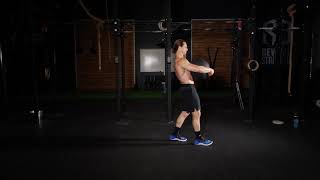
Sandbag Bear Hug Carry
Shared: Core, Glutes, Hamstrings, Quads, Upper Back, Sandbag, Carry, Core Stability, Functional Strength

Sandbag Bear Hug Carry
Shared: Core, Glutes, Hamstrings, Quads, Upper Back, Sandbag, Carry, Core Stability, Functional Strength

Sandbag Front Carry
Shared: Core, Glutes, Hamstrings, Quads, Upper Back, Sandbag, Carry, Core Stability, Functional Strength
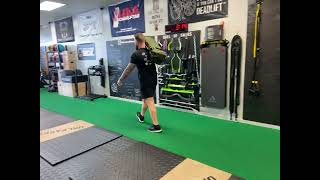
Sandbag Shouldering to Carry
Shared: Core, Glutes, Hamstrings, Quads, Upper Back, Sandbag, Carry, Functional Strength, Unilateral

Sandbag Zercher Carry
Shared: Core, Glutes, Hamstrings, Quads, Upper Back, Sandbag, Carry, Core Stability, Functional Strength

Barbell Zercher Carry
Shared: Core, Glutes, Hamstrings, Quads, Upper Back, Carry, Core Stability, Functional Strength