
Challenge · 2026
100 Standing Hamstring Curls: Can You Stay Steady?
Today’s RB100 challenge is 100 standing hamstring curls: 50 per leg, completed in controlled sets rather than a race. Bend one knee to bring your heel behind you, lower gently and alternate sides. Use a wall or sturdy chair for support, and reduce the range whenever control slips.
By Richard Branson · · Updated
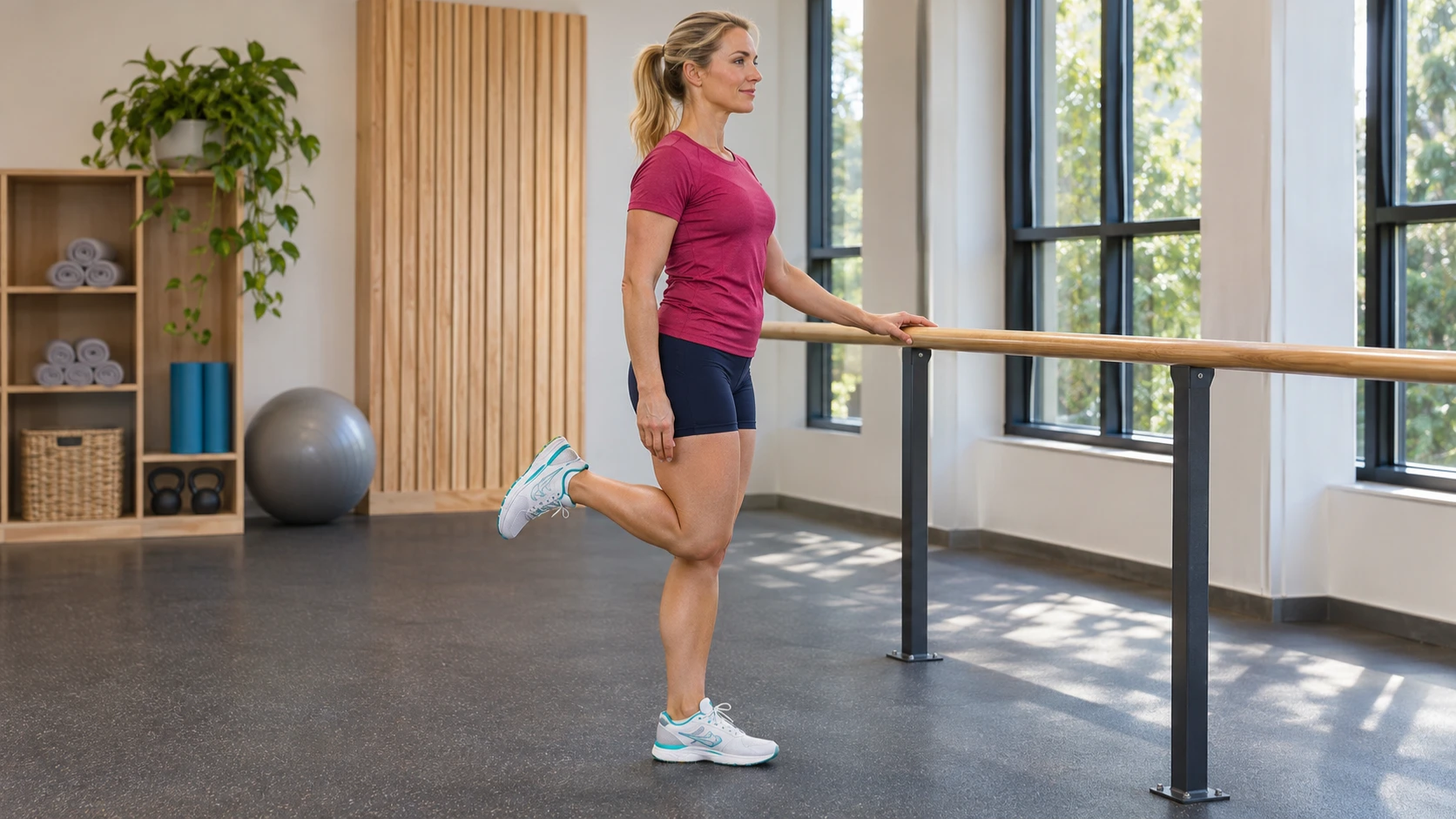
The challenge: can you complete 100 standing hamstring curls?
For 6 November 2026, your RB100 target is 100 alternating standing hamstring curls. Complete 10 sets of 10 reps, with five curls per leg in every set. The task is simple: bend your knee while keeping your trunk and working thigh still. This is a light muscular-control test, not a sprint or a replacement for loaded hamstring training. Choose a clear, non-slip space and keep support within reach.

How to do it: what are the exact steps?
- Prepare with 30–60 seconds of easy marching beside your support. Try four gentle practice curls, two per side; these do not count towards your 100.
- Stand with feet roughly hip-width apart and knees relaxed. Place your hands on a stable support as needed.
- Shift your weight onto your left foot. Bend your right knee, lifting your right heel behind you without swinging your thigh forwards.
- Take roughly one second to lift and one second to lower. Return your right foot gently to the floor: that is one rep.
- Repeat on the left. Continue alternating until you have completed 10 reps, five per leg.
- Rest for 15–30 seconds, or longer until you feel steady. Repeat for 10 sets in total, keeping a tally after each set.
- Finish at 100 controlled reps. Record any changes to support or range so you can repeat the same version another day.
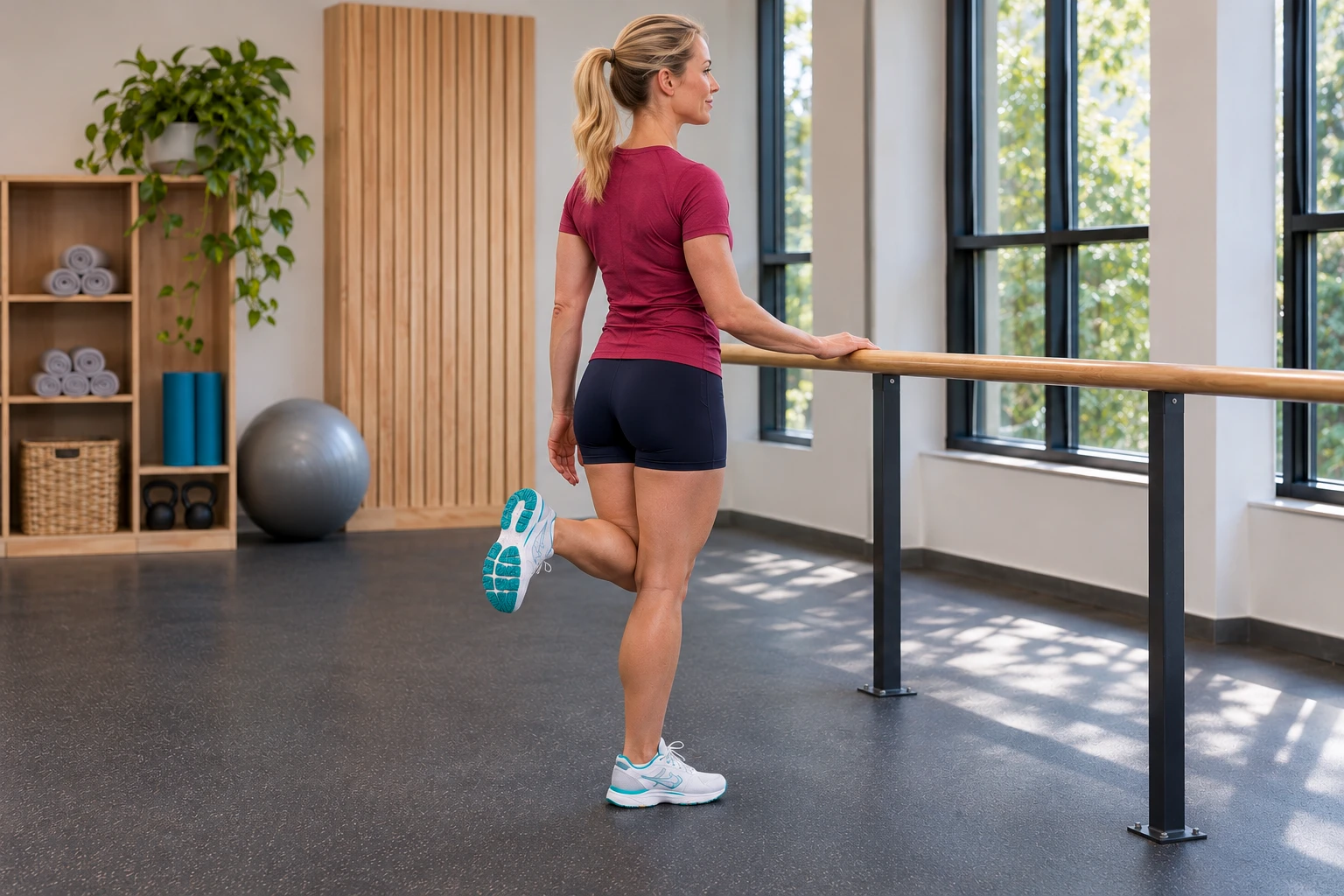
Scale it: how can you match your ability?
Make it easier by holding support with both hands and using a smaller knee bend. Split the work into 20 sets of five, continuing to alternate legs across set breaks so the final total stays even. If 100 is too much today, stop at a comfortable total and record it. For more control work, keep the support and add a one-second pause at the top; do not chase a higher heel position.
Coaching tips: what should stay still, and when should you stop?
Keep your ribs over your pelvis, your working knee pointing towards the floor and your supporting knee soft. Breathe normally. Avoid leaning forwards, arching your lower back or flicking your heel upwards. If posture starts to drift, pause and shorten the next set. Stop for sharp or increasing pain, a hamstring cramp, dizziness or loss of balance; do not push through to reach 100. Persistent or recurring symptoms need assessment by a qualified clinician before you retry.