
Challenge · 2026
100 Side-Lying Leg Raises: Keep Your Hips Steady
Today's RB100 challenge is 100 side-lying leg raises: 50 per side, split into five rounds of 10 each. Use a comfortable range, keep your hips stacked and lower each rep slowly. No weights are needed. Reduce the target or use supported standing raises if the floor position does not suit you.
By Richard Branson ·
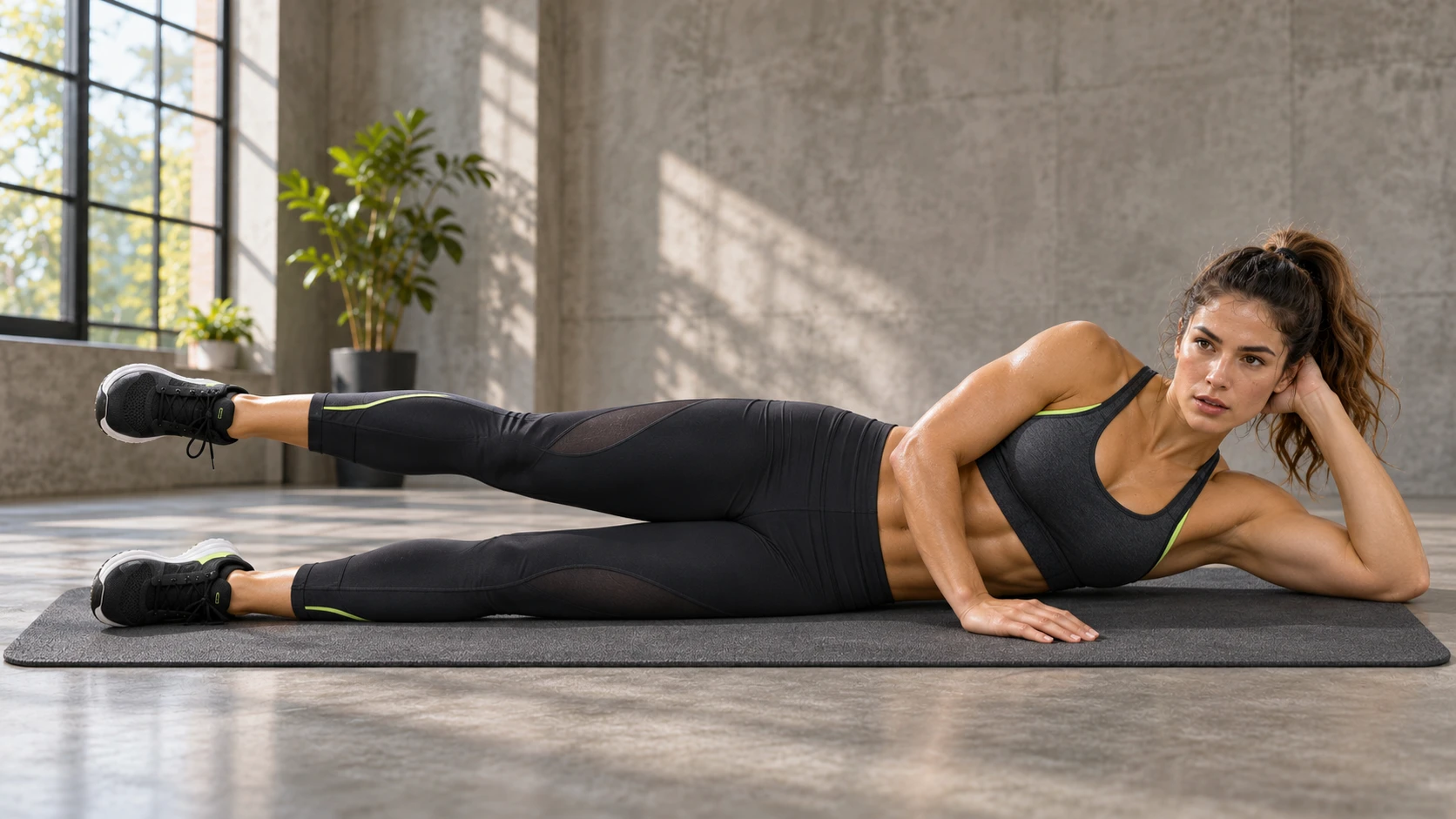
The challenge: can you complete 100 side-lying leg raises?
For 5 November 2026, your RB100 daily challenge is five rounds of 10 side-lying leg raises on each side. The aim is steady movement at the hip, not maximum height or speed. Keep both sides on the same rep count and finish each set before your position starts to slip.

How to do it: what are the exact steps?
- Practise three gentle raises per side before starting. These preparation reps do not count towards your 100.
- Lie on your left side with your head supported on your arm or a folded towel. Bend your bottom knee for stability and keep your top leg straight but not rigid.
- Stack your hips vertically. Place your free hand on the floor in front of you for light support, keeping your top leg in line with your trunk.
- Raise your right leg sideways without rolling backwards. Keep your toes facing forwards. Take roughly one second to lift and two seconds to lower.
- Complete 10 controlled raises, then turn over and complete 10 with your left leg. Each full lift and return counts as one rep.
- Rest for 20–30 seconds after both sides, or longer if your control has not recovered.
- Repeat for five rounds: 10 right plus 10 left, multiplied by five, equals 100. Record your reps and variation.
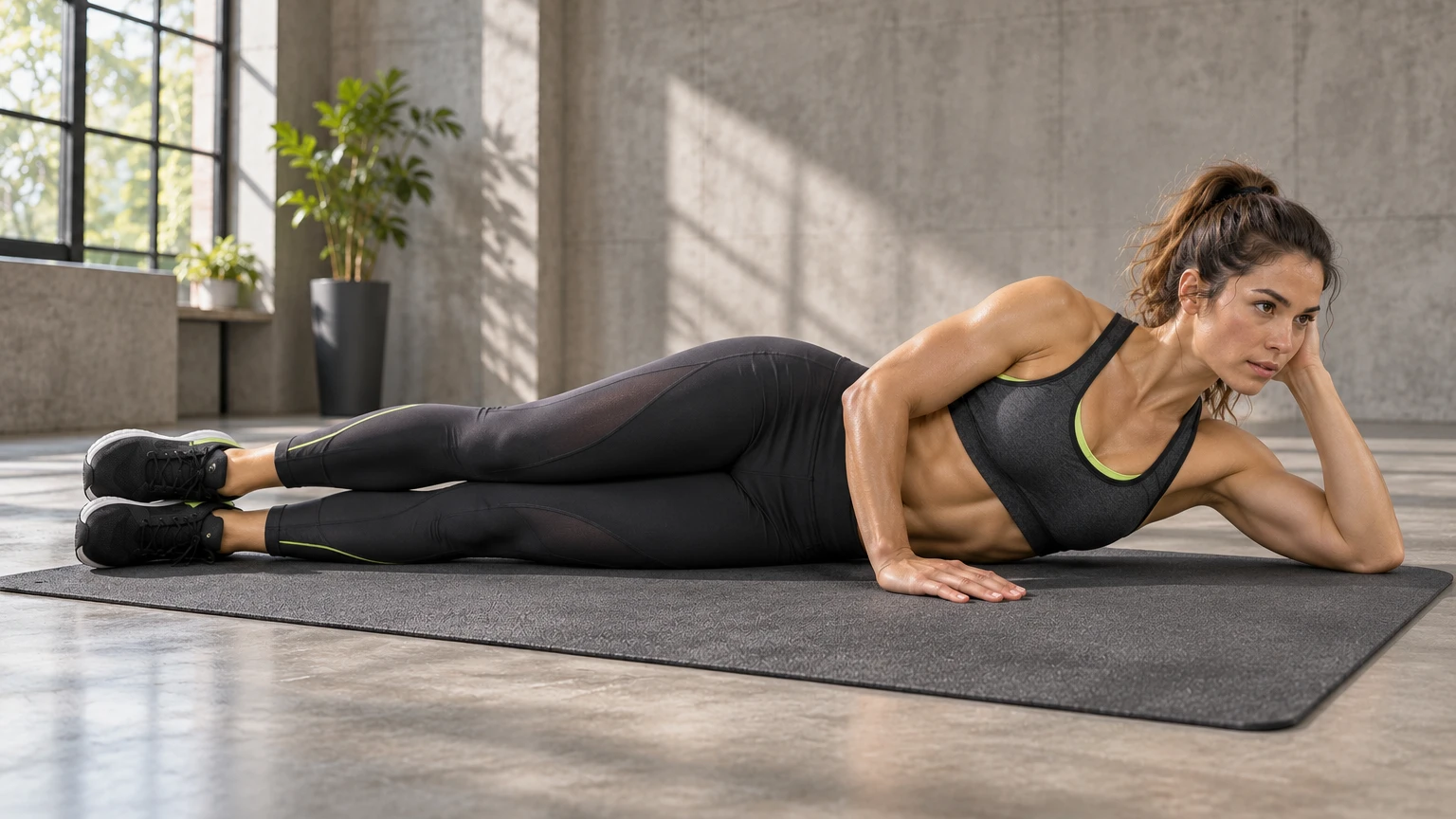
Scale it: how can you make the movement manageable?
Start with a smaller lifting range or divide each side's 10 reps into two sets of five. If floor work is awkward, hold a sturdy support and perform standing sideways leg raises without leaning. New to the movement? Complete two or three rounds for 40–60 total reps and build towards 100 another day. For a harder version, pause briefly at the top without lifting higher or adding extra reps.
Coaching tips: what should you watch for?
Keep your waist quiet and breathe normally. Think about moving the leg away from your body rather than throwing it upwards. If your toes rotate towards the ceiling, your trunk sways or your leg drops on the descent, shorten the range or rest. Stop for sharp or pinching hip pain, back pain, persistent cramping or dizziness; do not push through symptoms to reach 100. A smaller total with clean movement is the better result.