
Workout · Cardio
30-Minute Rowing Technique Ladder
This 30-minute rowing technique workout helps beginners and hybrid athletes practise a smoother stroke without chasing distance or exhaustion. Four timed blocks move from an easy warm-up through stroke-rate practice and controlled intervals to a cool-down. Keep the effort conversational and prioritise clean movement over a faster split.
Length
30 min
Level
Beginner
Format
Intervals
Equipment
Rowing machine
Your session
Saved on this device
Follow along with a timer and demo videos, no app needed. Track it over time in Studio
Who is this rowing technique ladder for?
Use this session if you are learning the rowing machine or want more controlled strokes for hybrid training. Its focus is technical rhythm, not a distance target, sprint test or mixed-station circuit. The full session is 30 minutes: five minutes warming up, six minutes practising rhythm, 15 minutes on the ladder and four minutes cooling down. Set the monitor to show time and strokes per minute before starting.

How should you pace and adjust each stroke?
- Keep the warm-up and recovery periods at an effort of 2–3 out of 10. Working intervals should feel like 4–5 out of 10: purposeful, but comfortable enough to speak in full sentences.
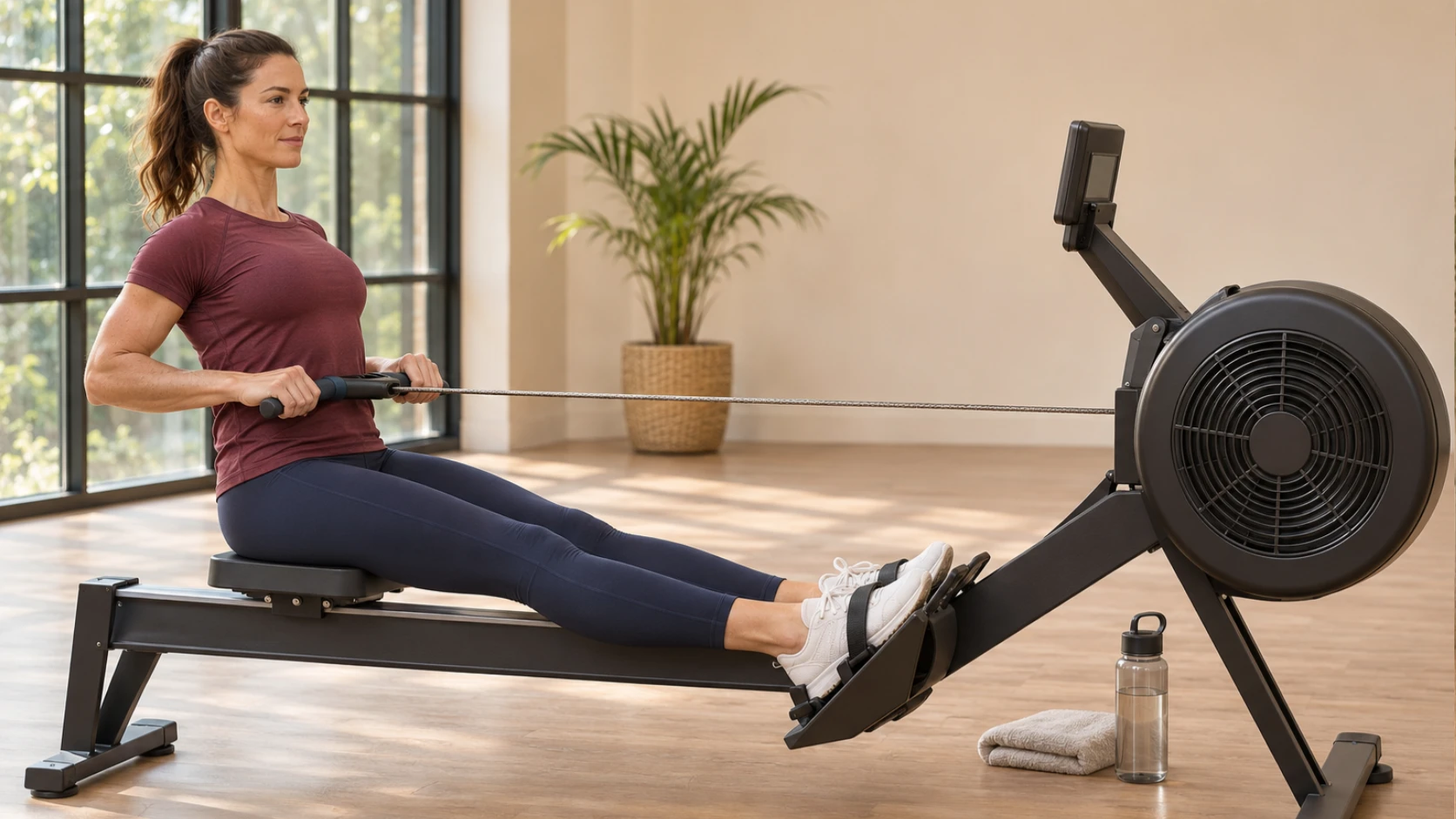
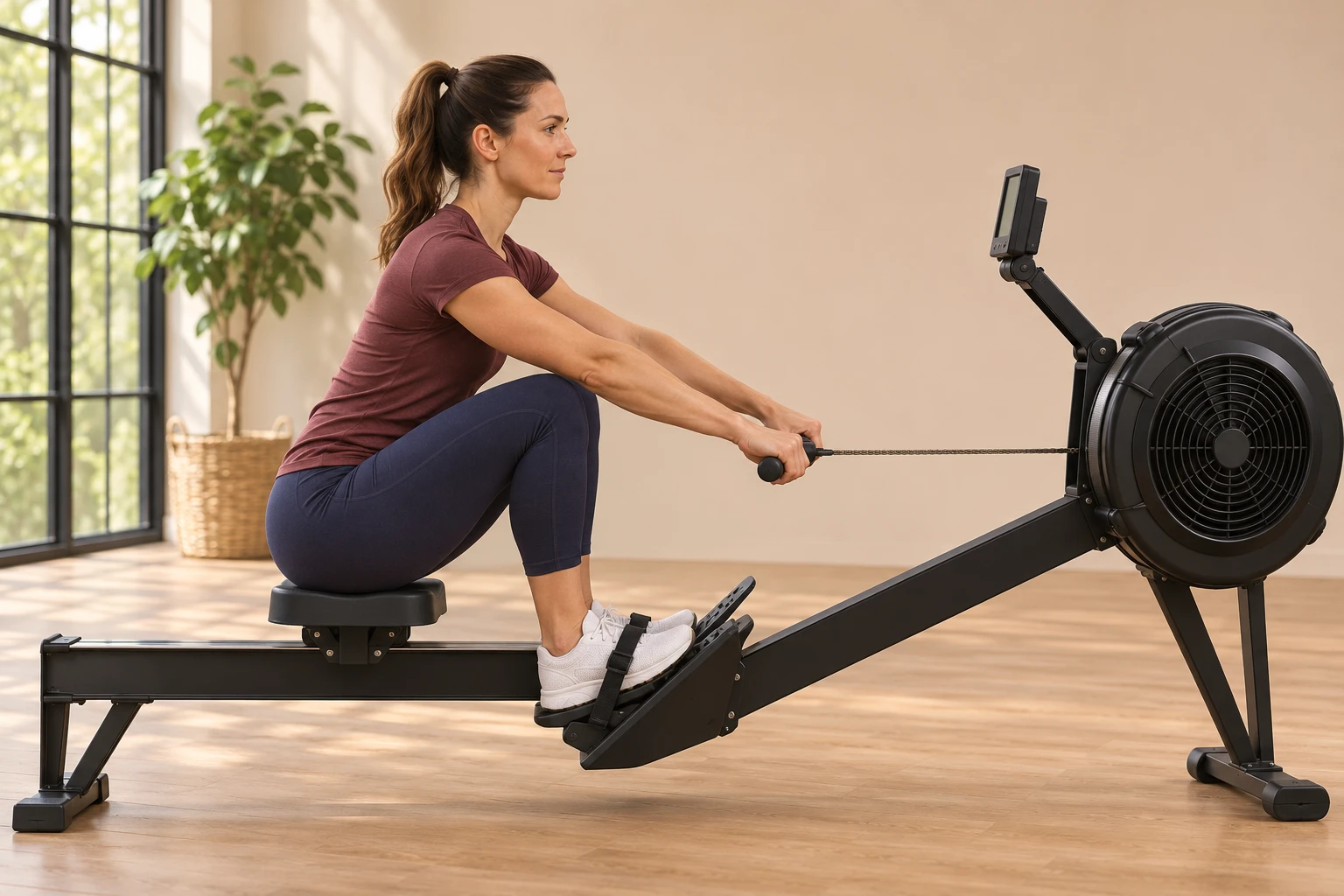
- On the drive, push with your legs, then open your hips slightly and draw the handle towards your lower ribs. Return with arms first, then hinge forwards, then bend your knees once the handle has cleared them.
- Increase stroke rate by making the rhythm slightly quicker, not by yanking the handle or sliding forwards uncontrollably. Let your split change naturally; do not chase a faster number.
- At the front of the stroke, avoid reaching so far that your lower back rounds. Use a shorter slide if needed and keep your shoulders relaxed rather than shrugging towards your ears.
- If technique deteriorates, switch to easy rowing for the remainder of that interval. Lower the next target by two strokes per minute. Stop the session for sharp or increasing pain, dizziness or unusual breathlessness.
- Complete each block in order. All recoveries are active rowing and included in the clock; there are no extra rest periods between blocks.
+What is the difference between stroke rate and rowing pace?
+What resistance should I use?
+How should I scale the ladder if I am new to rowing?
Warm-up: 0–5 minutes
Five continuous minutes. Begin gently and establish a smooth legs–body–arms drive before increasing pressure slightly.
- 1Rowing Machine1 × 5 min
Row easily at approximately 18–20 strokes per minute. Keep effort at 2–3 out of 10. Adjust the foot straps so they sit securely across the widest part of your feet.
Rhythm practice: 5–11 minutes
Alternate the two items for three rounds: 60 seconds practising the target rhythm, then 60 seconds very easy. Total: six minutes.
- 1Rowing Machine3 × 1 min
Target 18 strokes per minute in round one, 20 in round two and 22 in round three. Use light-to-moderate leg pressure. Aim for a deliberate drive and an unhurried return.
- 2Rowing Machine3 × 1 min
Active recovery at an easy, comfortable rhythm. Relax your grip and check that your arms straighten before your knees bend.
Controlled rate ladder: 11–26 minutes
Alternate the two items for five rounds: two minutes controlled rowing, then one minute easy. Total: 15 minutes. The final recovery is included.
- 1Rowing Machine5 × 2 min
Use these stroke-rate targets in order: 20, 22, 24, 22, 20 strokes per minute. Maintain conversational effort, no higher than 5 out of 10. If needed, use 18–20 throughout or shorten this work period to 60 seconds and extend the following recovery to 120 seconds.
- 2Rowing Machine5 × 1 min
Row very easily at roughly 18–20 strokes per minute. Reduce leg pressure and regain a relaxed breathing rhythm. Do not try to preserve the working split.
Cool-down: 26–30 minutes
Four continuous minutes of progressively easier rowing. Finish without a sprint or distance target.
- 1Rowing Machine1 × 4 min
Gradually ease the pressure through your feet. Keep the same stroke sequence at a comfortable rhythm and allow your breathing to settle before stepping off.