Recipe · British-inspired
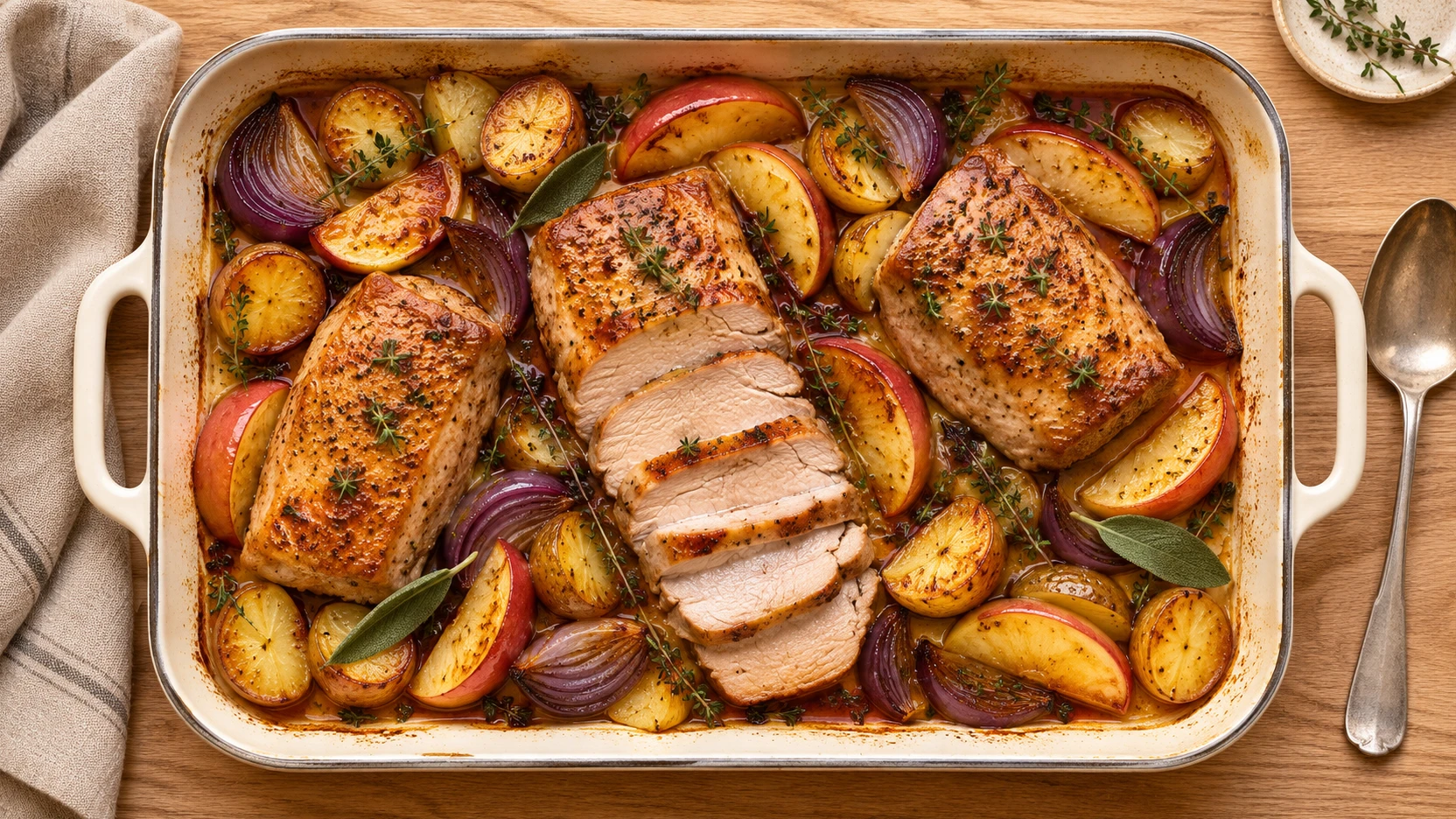
Pork and apple traybake
Pork and apple traybake makes a practical post-training dinner, pairing lean pork with crisp potatoes, sweet roasted apple and mustard-coated vegetables. It delivers an estimated 45 g protein per serving alongside carbohydrate for refuelling. Everything cooks in one roasting tin, with a short rest before carving to keep the pork juicy.
By Relentless Bravery ·
- Prep
- 15 min
- Cook
- 50 min
- Total
- 1 hr 10 min
- Makes
- 2 dinner portions
- Difficulty
- Easy
Why choose pork and apple traybake after training?
Sharp mustard balances the sweetness of roasted apple, while golden potato edges contrast with tender pork and lightly charred broccoli. The tray juices bring everything together without needing a separate sauce. It is a straightforward roast-style dinner with enough variety to keep each mouthful interesting.
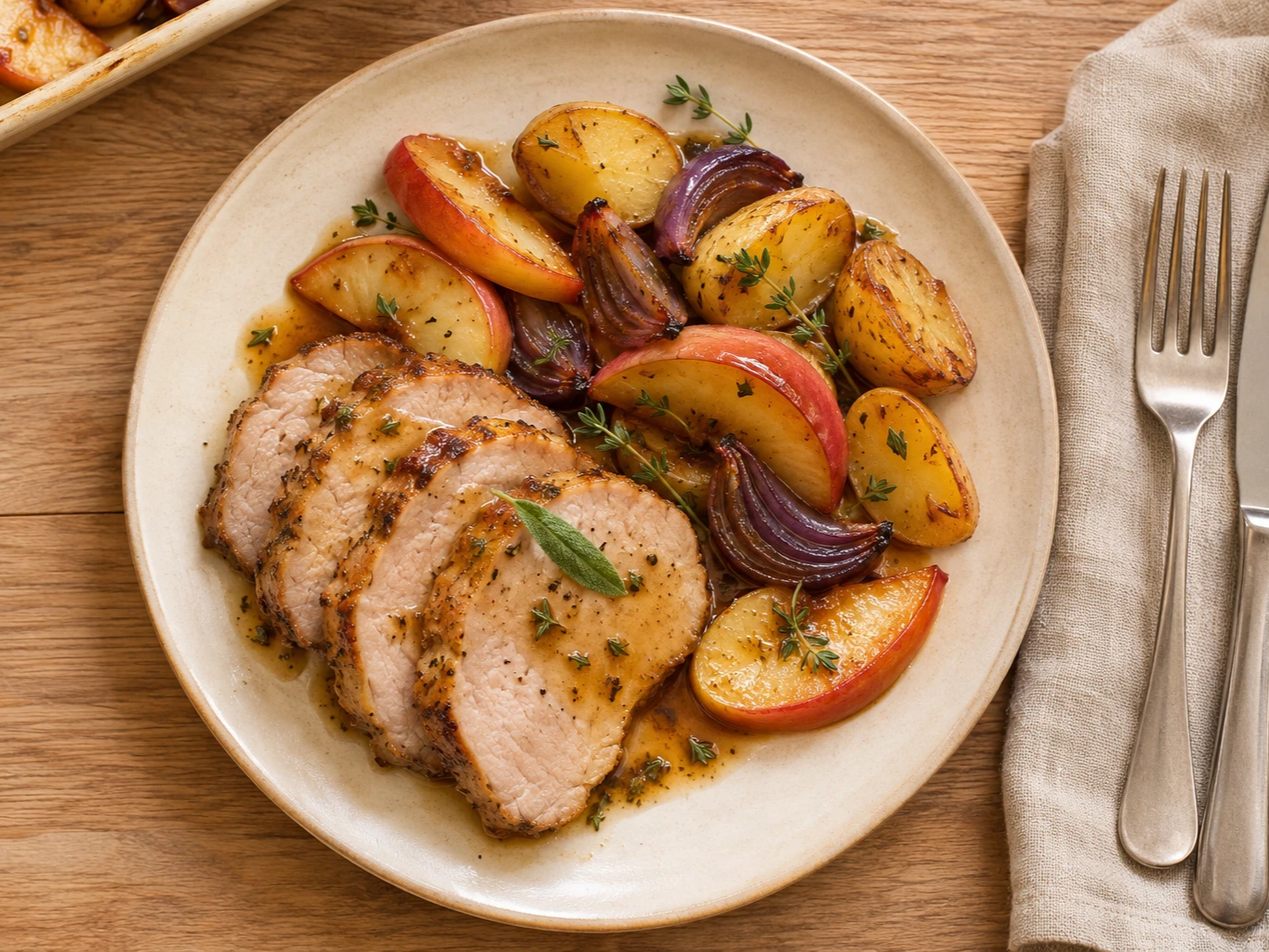
After running, lifting or mixed-modal work, this plate combines a substantial protein portion with carbohydrate rather than treating recovery as protein alone. Most of the cooking time is hands-off, making it practical for an evening at home. The generous vegetable portion makes it better suited to after training than immediately before hard intervals.
+Can I use chicken instead of pork?
+Can I prepare this dinner ahead?
+Can I freeze the cooked traybake?
Ingredients
Makes 2 dinner portions
For the traybake
Equipment
Large roasting tin · Chopping board · Sharp knife · Small mixing bowl · Measuring spoons · Digital food thermometer · Kitchen foil
Method
- 1
Heat and prepare
Heat the oven to 200°C fan. Put the potatoes and carrots in a large roasting tin, add 15 ml of the oil and the salt, then toss thoroughly and spread into a single layer.
Tip: Use a tin large enough to leave space for the pork and remaining vegetables.
- 2
Start the vegetables
Roast the potatoes and carrots for 25 minutes, turning them halfway through so their edges colour evenly.
Tip: Dry potatoes well before adding oil to encourage crisp edges.
- 3
Add pork and apple
Mix the mustard, thyme, black pepper and remaining 5 ml oil. Coat the pork with the mixture, then place it in the centre of the tin. Add the apple wedges around it and roast for 10 minutes.
Tip: Tuck a thin fillet tail underneath itself so the pork cooks more evenly.
- 4
Finish roasting
Add the broccoli, turn it through the tray juices and pour the water around the vegetables. Roast for another 15 minutes, or until the pork reaches 75°C in its thickest part and stays there for at least 30 seconds. If needed, continue cooking and check again.
Tip: Insert the thermometer into the centre of the meat without touching the tin.
- 5
Rest the pork
Transfer the pork to a clean board, cover loosely with foil and rest for 5 minutes. Check that the potatoes and carrots are tender; keep them warm in the switched-off oven, or roast a little longer if needed.
Tip: Resting before slicing helps retain the meat juices.
- 6
Slice and serve
Slice the pork across the grain and divide between two plates with the potatoes, carrots, apple and broccoli. Spoon over the remaining tray juices.
Tip: Divide the meat and potatoes evenly if using the per-serving nutrition estimate.

Nutrition per serving
| Calories | 568 kcal |
|---|---|
| Protein | 45 g |
| Carbohydrate | 61 g |
| of which sugars | 19 g |
| Fat | 16 g |
| of which saturates | 2.5 g |
| Fibre | 11 g |
| Salt | 1 g |
Estimated from typical ingredient values. Brands and portion sizes will change the numbers.
Tips & swaps
- Choose a firm eating apple rather than a cooking apple if you want wedges that hold their shape.
- Check the mustard label if managing allergies: mustard itself is an allergen.
- Nutrition is estimated per serving from standard UK food composition values for the listed quantities. Brands, trimming and portion sizes will affect the result.
- Scale training to your current capacity: shorten running intervals, reduce sled loads or lighten squats when technique deteriorates. Stop for sharp pain, dizziness or chest pain; seek urgent medical help for chest pain.
Storage
Cool leftovers promptly in shallow containers and refrigerate within two hours. Keep chilled and eat within 48 hours, or freeze for up to three months for best quality. Reheat only once until steaming hot throughout; a covered ovenproof dish with a splash of water helps prevent the pork drying out.