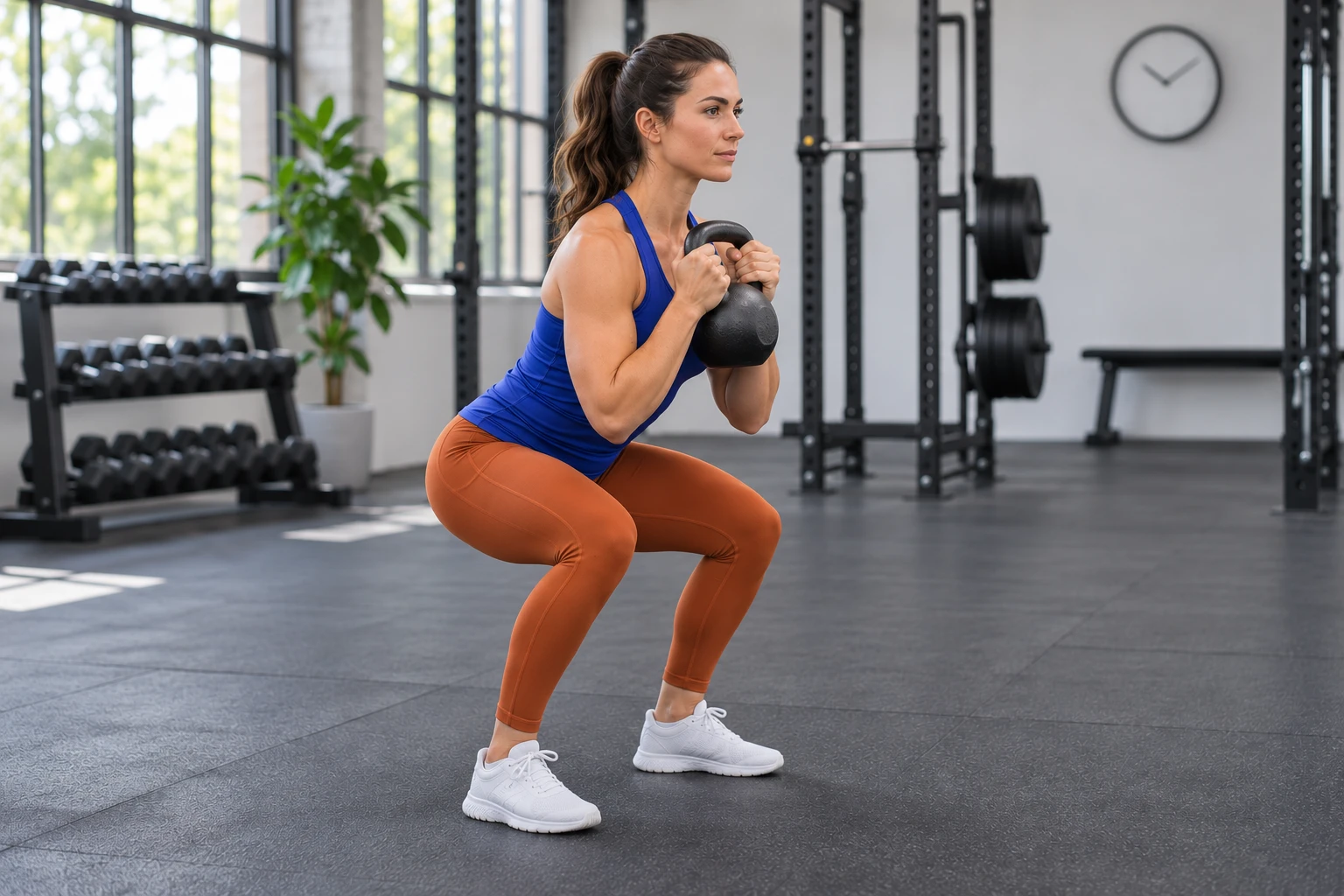
Tempo training is the deliberate control of how quickly you perform each phase of a strength exercise, including lowering, pauses and lifting. Often written as a four-part code, it helps athletes practise positioning, standardise repetitions and adjust difficulty without relying only on heavier weights.
Definition
Tempo training is a strength-training method that prescribes the duration or intended speed of an exercise’s movement phases and pauses. It makes repetition timing an explicit part of the prescription alongside load, sets, repetitions and rest.
Why it matters
Two sets with the same weight and repetition count can feel very different if one uses quick repetitions and the other includes slow lowering and pauses. Recording tempo makes sessions easier to compare and can reveal where an athlete loses position or relies on bouncing.
Deeper explanation
A common four-part code describes the eccentric phase, the pause after lowering, the concentric phase and the pause after lifting, in that order. Numbers usually represent seconds. An X means lift with the intent to move as quickly as possible while maintaining technique; a heavy load may still move slowly. The code describes phases, not necessarily the order in which an exercise starts: a deadlift begins with lifting even though the code commonly lists lowering first. Longer repetitions increase time under tension at a given repetition count, but this alone does not determine the training result.
Examples
For a goblet squat at 3-1-1-0, lower for three seconds, hold your controlled bottom position for one second, stand in one second and start again without a deliberate top pause. For a press-up at 2-1-1-1, lower for two seconds, pause briefly above the floor, press up in one second and hold the top for one second.
How to programme it
Use tempo selectively rather than slowing every exercise. For example, an athlete could practise two or three sets of five goblet squats at 3-1-1-0, using a load that leaves several technically sound repetitions available. Treat this as an illustrative starting point, not a universal prescription. Reduce the load or repetitions if the timing breaks down, and record the tempo so future sessions remain comparable.
In HYROX and hybrid racing
Controlled squats and press-ups can provide supporting strength work for HYROX preparation. Tempo work is not a substitute for practising event movements, running or transitions at appropriate speeds. Keep demanding slow-repetition work away from key sessions if the resulting fatigue compromises their quality.
FAQs
+What does a 3-1-1-0 tempo mean?
Using the common lowering–bottom pause–lifting–top pause convention, it means lower for three seconds, pause for one second, lift for one second and begin the next repetition without a deliberate pause at the top. Check your programme’s notation because conventions can vary.
+Is slower tempo always better for strength?
No. Slower repetitions change the training demand and usually reduce the load or repetitions you can manage. They can support positional practice, but they are not automatically superior for strength or muscle growth. The appropriate speed depends on the exercise and training goal.
+Is tempo training the same as a tempo run?
No. In strength training, tempo describes the timing of individual repetition phases. A tempo run generally means a sustained, controlled hard running effort, although coaches differ in how they prescribe its intensity.
Also known as: lifting tempo, repetition tempo
Tempo training makes the timing of a strength repetition deliberate. Rather than simply completing the required reps, you control how you move through them.
How should you start tempo training?
Choose a familiar exercise that you can already perform with control.
Check which phase each part of the tempo code describes.
Practise the timing with bodyweight or a light load before adding resistance.
Count steadily or use a metronome as a guide, without letting timing distract you from technique.
End the set when you can no longer maintain the prescribed timing and position.
How can you scale squats and press-ups?
For squats, remove the external load first. If balance or depth remains difficult, use a stable support or squat to a box at a height you can control. Do not force a deeper position merely to complete the pause.
For press-ups, elevate your hands on a secure bench or rack bar. Choose a height that lets you lower your chest and hips together, maintain trunk control and press back up without sagging. Reduce repetitions before sacrificing those standards.
When should you stop or adjust?
Stop the set if you lose balance, cannot control the descent or need to bounce through a prescribed pause. Rest, then reduce the load or use an easier variation. Stop the exercise for sharp or increasing pain, dizziness or feeling faint; do not push through these symptoms. Seek qualified advice for persistent or recurring symptoms.