Glossary
Step-up
Step-up
Pronounced: step.ʌp
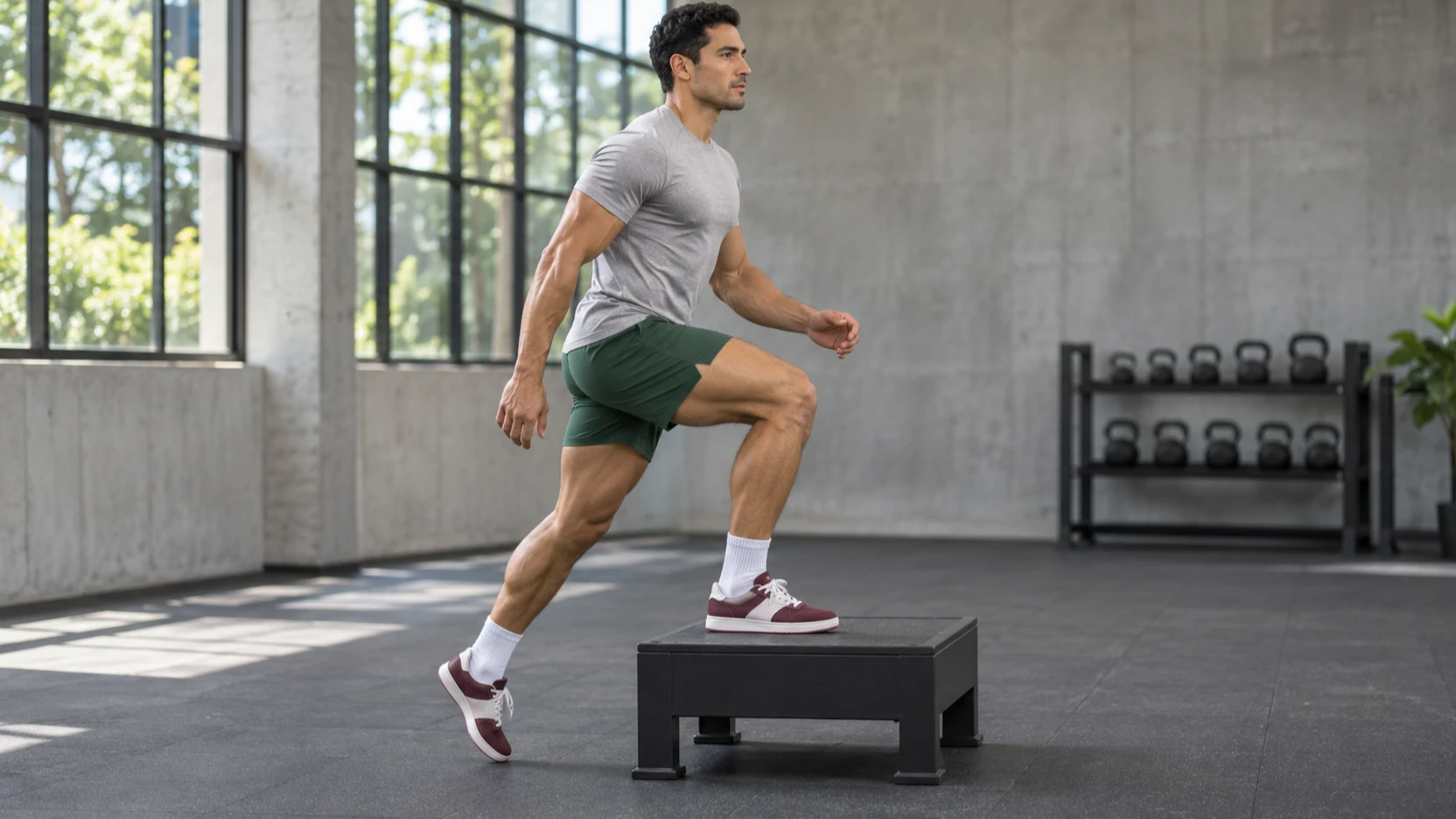
A step-up is a lower-body strength exercise in which you place one foot on a raised platform and lift your body onto it. It trains the quadriceps and gluteal muscles while challenging single-leg control. Athletes can adjust platform height, external load and support to match their strength and balance.
A step-up is a unilateral lower-body exercise performed by stepping onto a stable raised platform, extending the lead hip and knee to lift the body, then returning to the starting position under control. The working leg remains supported by the platform throughout its lifting and lowering phases.
Step-ups let athletes train each leg separately and observe differences in strength, balance and movement control. They offer a practical accessory exercise for runners and hybrid athletes, whose sport includes repeated single-leg support. A difference between sides is useful training information, not a diagnosis or proof of injury risk.
The quadriceps extend the lead knee, while the gluteus maximus contributes to hip extension. Muscles around the hip, ankle and trunk help control the pelvis and body position. These muscles work to raise the body during the ascent and control its descent. Platform height, external load, trunk position and assistance from the trailing leg all affect the exercise demand. Some forward trunk lean is normal; the aim is controlled movement rather than an artificially upright posture.
A bodyweight step-up onto a low exercise step is an accessible starting variation. A supported step-up uses a fixed handhold to reduce the balance challenge. A dumbbell step-up adds external resistance once the athlete can ascend and descend consistently. These are scaling options, not a compulsory progression sequence.
Use step-ups as accessory strength work after the main lift, or in a separate lower-body session. An illustrative starting prescription is two sets of six controlled repetitions per leg, using a height and load that leave several good repetitions available. Rest enough to maintain control. Progress one variable at a time: repetitions, load or platform height. Raising the platform changes the movement demand, so it should not be treated as interchangeable with adding weight.
For HYROX preparation, step-ups can supplement single-leg strength work without requiring walking space. Keep strength-focused sets controlled rather than chasing speed. They do not reproduce the exact demands of running or sandbag lunges, and should not displace practice of those movements.
+How high should the platform be for a step-up?
Use a height that lets you plant the whole lead foot, lift yourself without jumping off the trailing leg and lower under control. A higher platform increases the movement demand, but is not automatically better. Lower it if you need to swing your body or lose pelvic control.
+Can I use support during step-ups?
Yes. Light hand support on a fixed rail or upright can reduce the balance demand while you practise loading the lead leg. Use a secure support rather than movable equipment, and avoid pulling yourself up with your arm.
+Are step-ups useful for HYROX?
Step-ups are not a standard HYROX race station, but they can provide accessory work for single-leg strength and control. They complement rather than replace running, lunges and race-specific station practice.
Also known as: step up, box step-up
A step-up uses one leg to lift your body onto a raised surface. The useful training effect comes from controlling that lift and the return, not simply reaching the top by any means.
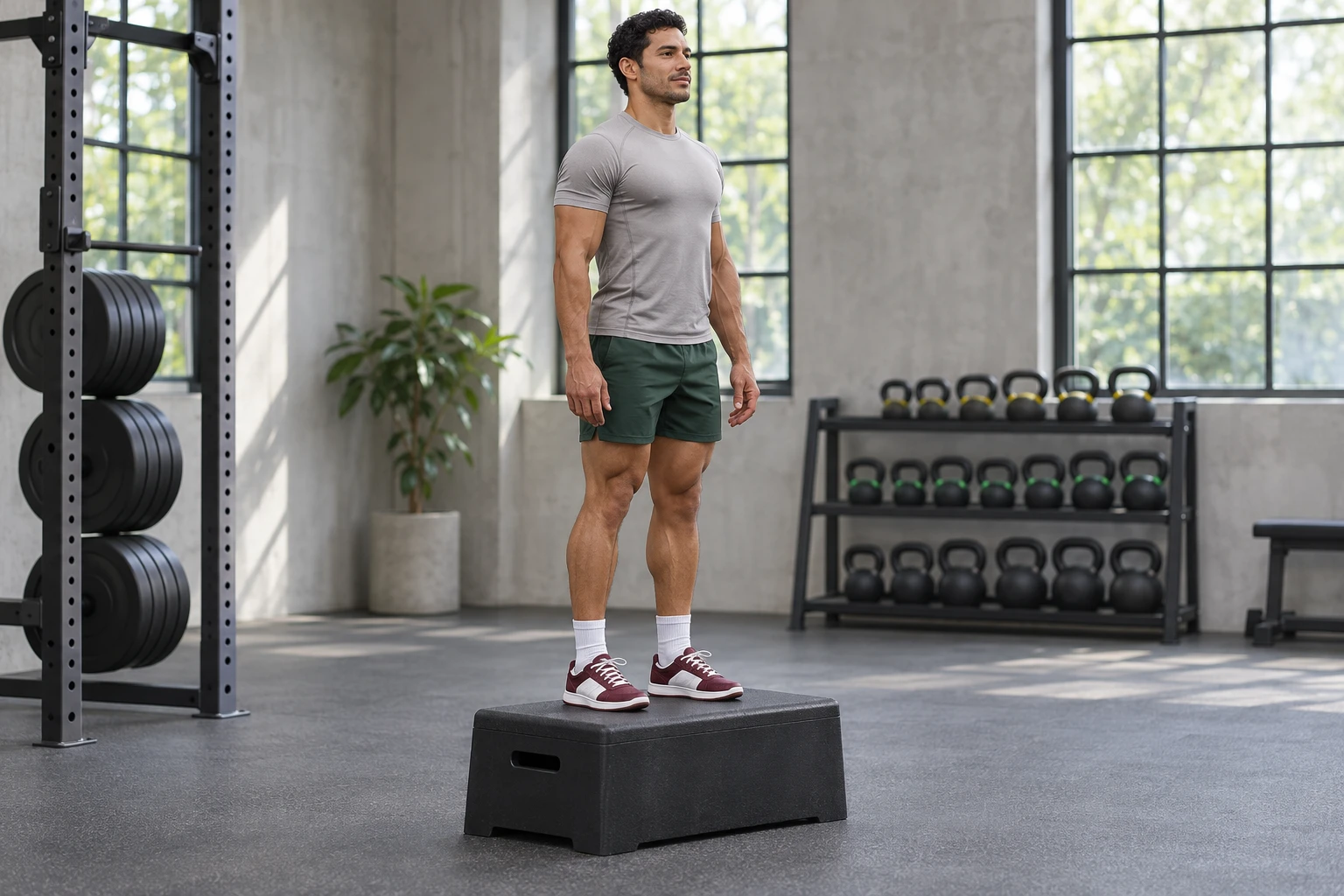
- Choose a stable, non-slip platform with enough space for your whole foot. Avoid improvised or unstable furniture.
- Face the platform and place your lead foot fully on it. Keep your heel supported.
- Push through the lead foot and extend that hip and knee, allowing the knee to move in line with the foot.
- Bring the trailing foot onto the platform without forcefully jumping off the floor or swinging it upwards.
- Keep the lead foot planted while you lower the trailing foot back to the floor under control. Complete the planned repetitions, then change sides.
How can you scale the movement?
Start with bodyweight and a low platform. If balance limits the movement before the working leg becomes challenged, use light support from a fixed handhold. Reduce platform height if you cannot maintain full-foot contact or control the descent.
Add dumbbells only when the unweighted version is consistent. Avoid increasing height and load together: changing one variable makes it easier to judge whether you still control the exercise.
What tells you to end the set?
End the set if you repeatedly spring off the trailing foot, drop heavily on the descent or lose your footing. Stop immediately if the platform shifts. Reset the equipment and reduce the demand before continuing.
Stop exercising if you experience sharp or increasing pain, dizziness or a joint giving way. Do not use a lower step to push through those symptoms. Persistent or recurrent symptoms warrant advice from a qualified healthcare professional; general technique guidance cannot establish their cause.