Glossary
Split squat
Split squat
Pronounced: splɪt skwɑt
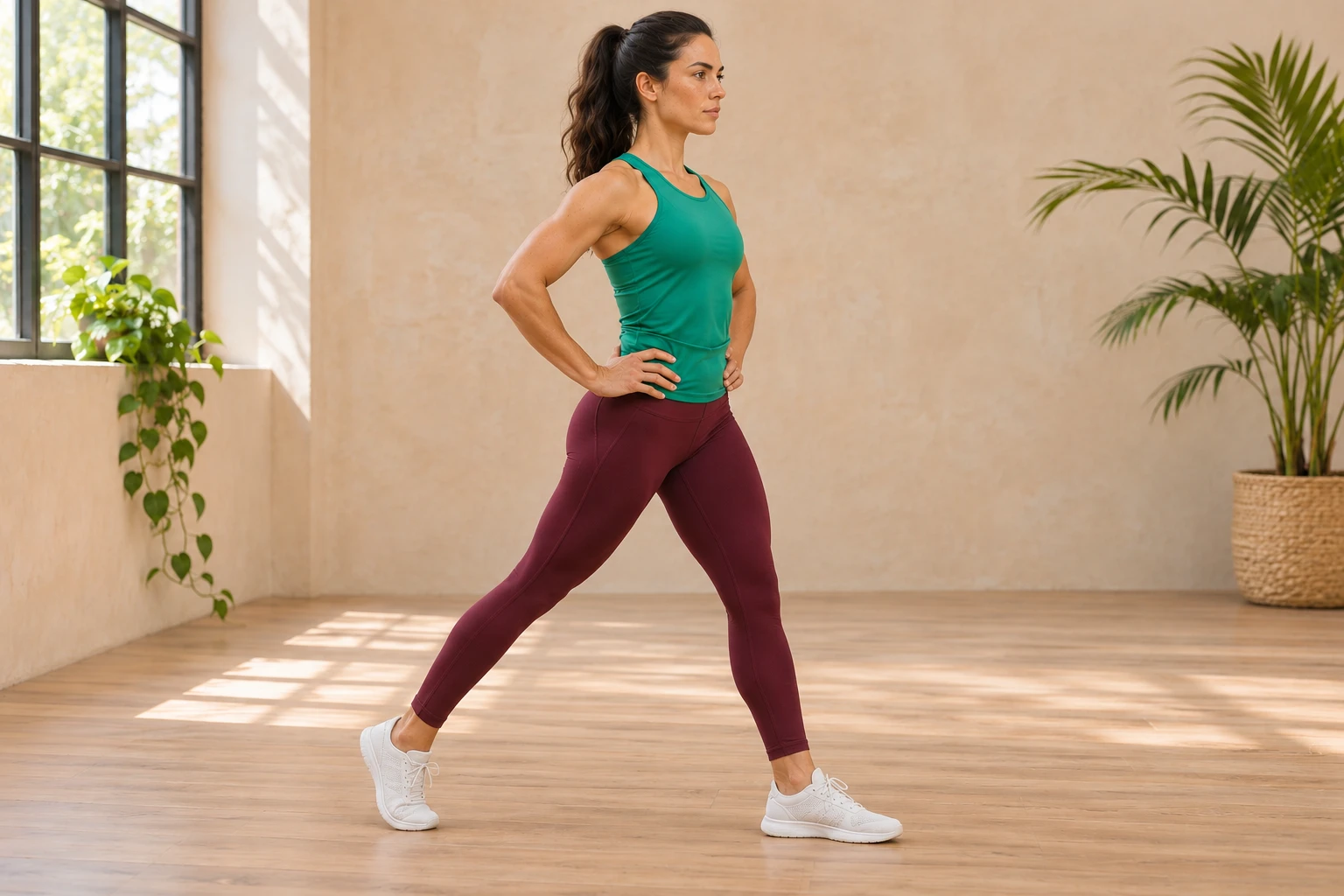
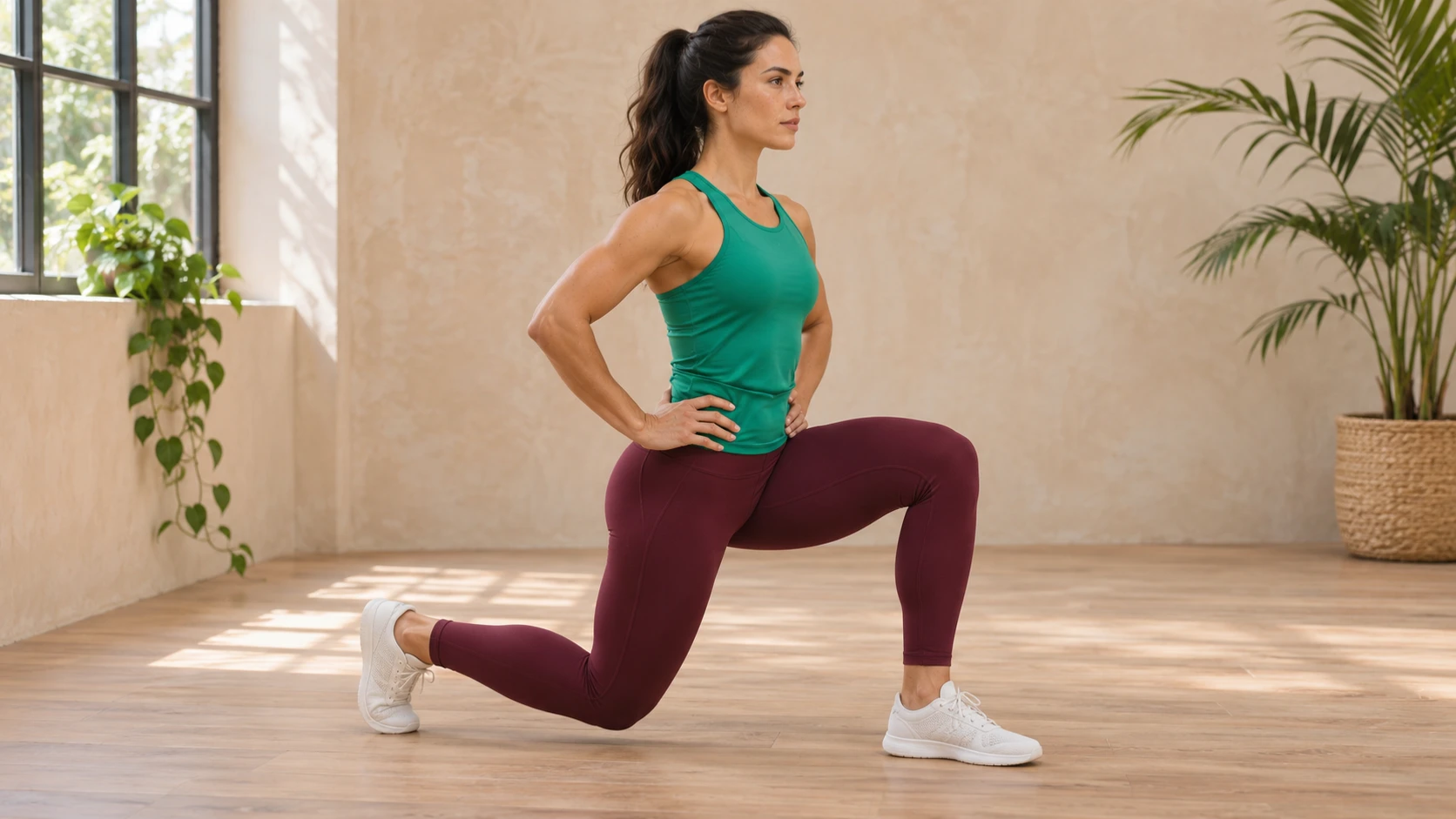
A split squat is a lower-body strength exercise performed in a stationary, staggered stance. You bend both knees to lower your body, then stand back up without stepping. It primarily trains the quadriceps and glutes, helping athletes develop leg strength, balance and control with an emphasis on one leg at a time.
A split squat is a stationary, staggered-stance strength exercise in which both knees bend to lower the body and extend to raise it. The front leg usually carries the greater training emphasis, while the rear leg contributes support and force.
Split squats let athletes train each side separately without requiring unsupported single-leg balance. They can reveal differences in strength or movement control and provide useful leg-strength work alongside running and hybrid training. A difference between sides is not, by itself, evidence of an injury.
The quadriceps at the front of the thigh extend the knee, while the gluteus maximus helps extend the hip as you rise. Muscles around the hip, ankle and trunk help control alignment and balance. Stance length, torso angle, depth and load placement influence the demands at the hip and knee. Both legs remain involved, so this is a unilateral-emphasis exercise rather than an isolated single-leg movement.
Options include a bodyweight split squat, a supported split squat with one hand on a stable upright, a goblet split squat holding a weight at the chest, and a dumbbell split squat with weights at the sides. Rear-foot-elevated split squats are a separate variation.
As a practical starting example, use 2–3 sets of 6–10 controlled repetitions per side, finishing with around two repetitions still possible with good technique. Adjust this to your experience and wider training load. Start with the less capable side and match its controlled repetitions on the other. Add repetitions or load only when your chosen depth and balance remain consistent.
Split squats can support the leg-strength preparation used alongside HYROX running and sandbag-lunge practice. Their stationary stance makes them useful for controlled strength work, but they do not replace walking lunges or practising race-specific technique under fatigue.
+What is the difference between a split squat and a lunge?
In a split squat, your feet remain in the same staggered position throughout the repetitions. A lunge includes a step into or out of that position. Both train the legs, but stepping adds a different balance and movement-control demand.
+Should your front knee stay behind your toes?
Not necessarily. The front knee can move beyond the toes during a controlled split squat. Your proportions, stance and ankle mobility influence how far it travels. Keep the front heel grounded and use a comfortable range rather than forcing a vertical shin.
+Is a Bulgarian split squat the same exercise?
It is a rear-foot-elevated variation of the split squat. Raising the rear foot changes the support position and can increase the demand on the front leg. It is an option, not a required progression; a floor-based split squat can also be loaded progressively.
Also known as: static lunge, stationary lunge
The split squat is a squat from a fixed, staggered stance: you lower and rise without taking a step between repetitions. Set up for balance before adding weight.
- Place one foot forward and the other behind, with some sideways separation rather than balancing on a tightrope.
- Keep the front foot planted and the rear heel raised, with the rear forefoot supporting you.
- Bend both knees and lower under control. Let the front knee move broadly in line with the foot.
- Descend only as far as you can maintain balance and a comfortable movement. The rear knee does not need to touch the floor.
- Push through the front foot to rise, keeping the feet stationary and avoiding a bounce at the bottom.
How can you scale it to your ability?
If balance limits the exercise, hold a stable support and begin without external load. If depth is difficult to control, shorten the range temporarily. Adjust your stance rather than forcing a position that feels cramped or excessively stretched.
Build a repeatable movement before increasing difficulty. You can gradually increase comfortable depth, reduce hand support or add load. Change one variable at a time so you can judge whether control is improving.
When should you end the set?
End the set if you repeatedly lose balance, your front heel lifts unintentionally, or you can no longer control the descent. Reduce the load or use support before trying again. Stop the exercise for sharp or worsening pain, dizziness or feeling faint. Persistent or recurring symptoms need advice from a qualified healthcare professional rather than a technique workaround.