Glossary
What is a Romanian deadlift?
A Romanian deadlift is a hip-hinge strength exercise in which you lower a weight from standing by pushing your hips backwards while keeping your knees slightly bent. It trains the hamstrings, glutes and spinal erectors, helping athletes develop posterior-chain strength and control without lifting from the floor on every repetition.
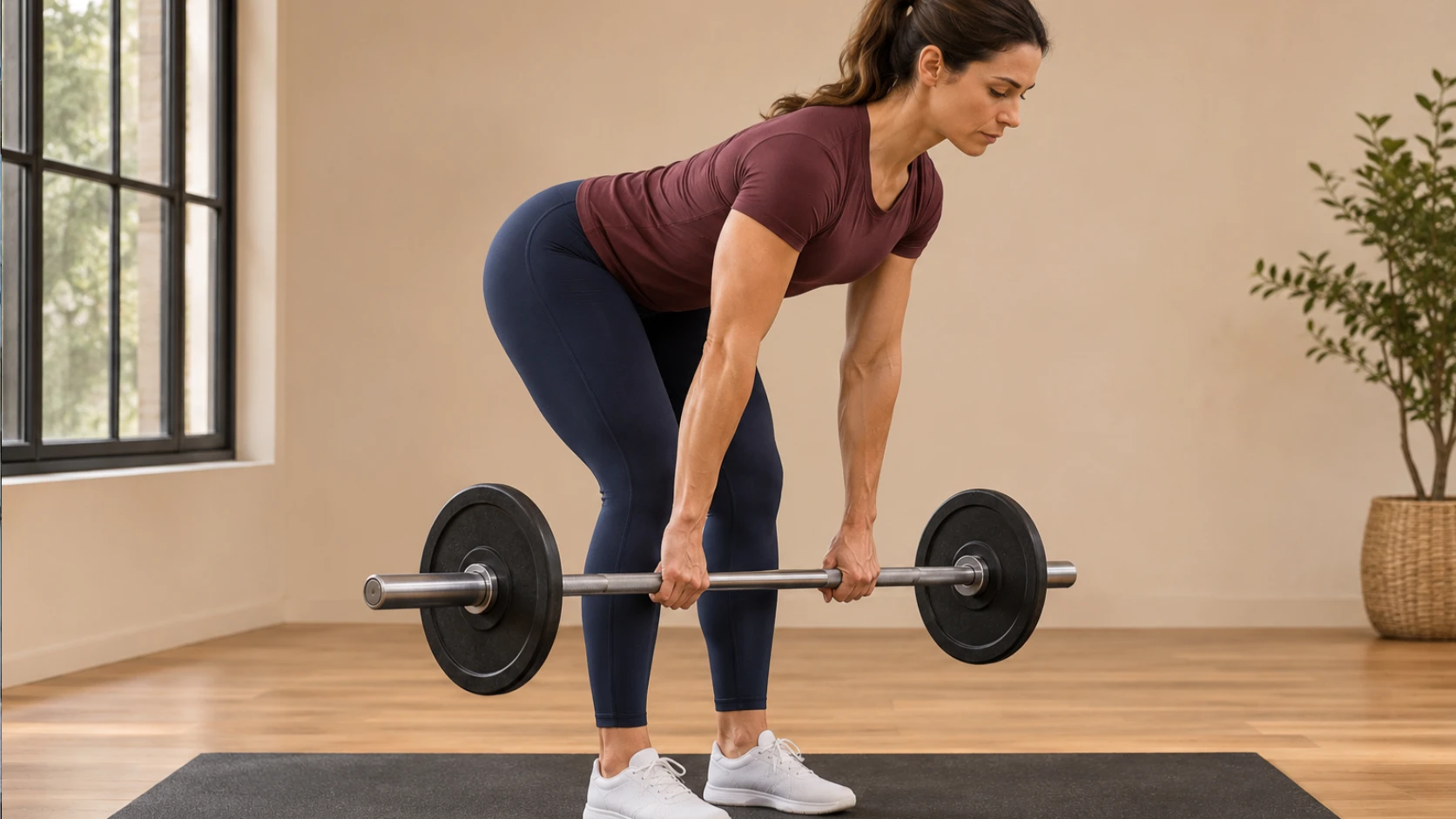
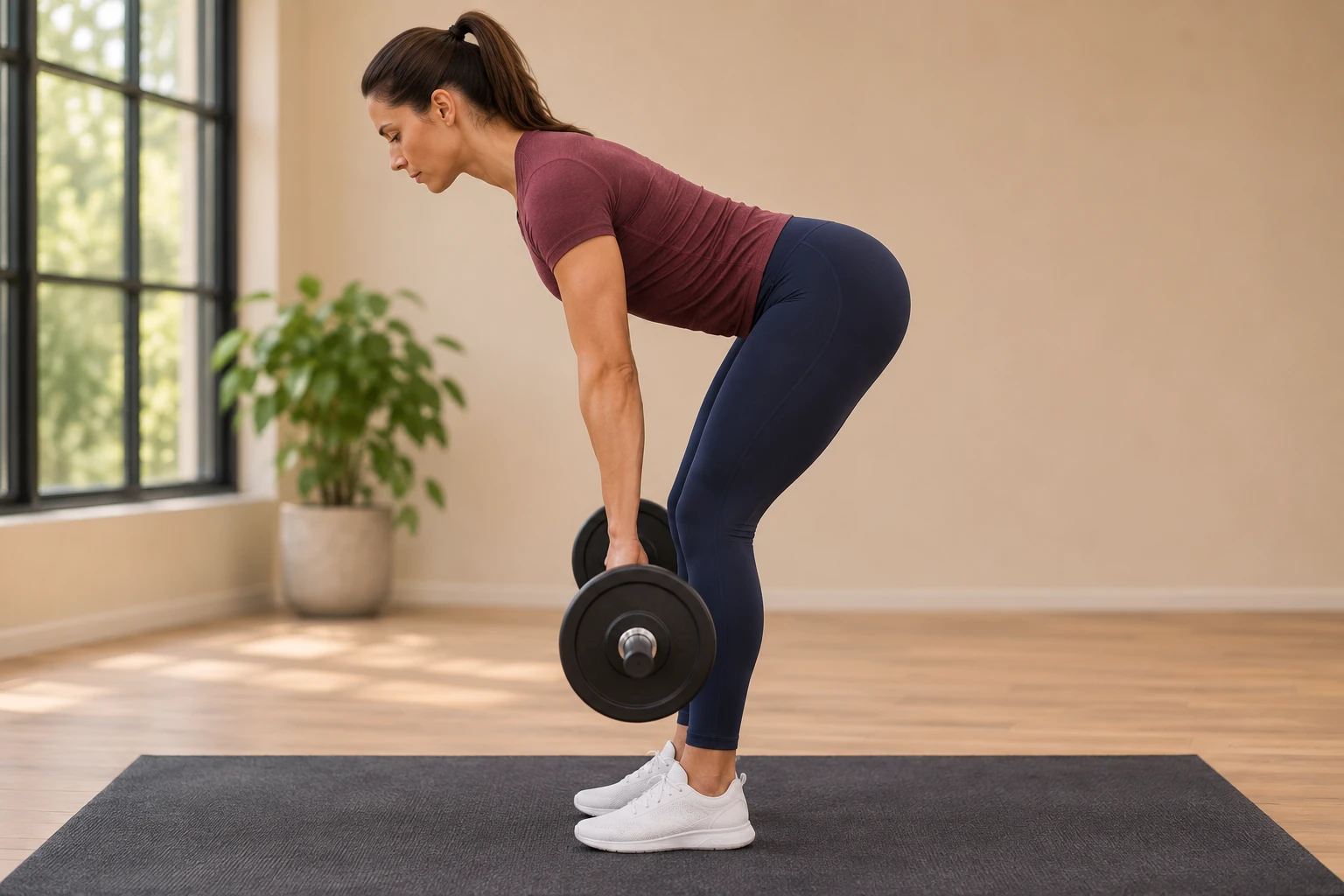
The Romanian deadlift, commonly abbreviated to RDL, is a loaded hip hinge performed from standing. The knees remain slightly bent with relatively little change in their angle while the hips flex to lower the weight, then extend to return to standing.
Athletes should understand the RDL because it develops hip-extension strength and teaches the difference between hinging and squatting. It provides a way to load the hamstrings and glutes without making floor contact the target of each repetition.
The gluteus maximus and hamstrings contribute to hip extension as you stand up. During the descent, these muscles control hip flexion under load. The spinal erectors help resist the trunk folding forwards, while the abdominal muscles contribute to trunk stiffness. Grip also matters when holding a barbell or dumbbells. Your available range depends on hamstring tolerance, body proportions and movement control; a lower finish is not automatically a better repetition.
A barbell RDL keeps the load close to the thighs and shins. A dumbbell RDL allows a more flexible hand position. A supported single-leg RDL adds a unilateral challenge, although its balance demands mean it is not necessarily a simpler option.
One practical starting option is 2–3 sets of 6–10 controlled repetitions with a load that leaves roughly 2–3 repetitions in reserve. Adjust this to experience and the rest of the training week. Add load only when the same range and control remain consistent. Avoid placing unfamiliar, demanding RDL sessions immediately before priority running workouts, as hamstring soreness may affect them.
The RDL is not a HYROX race station. It can support general preparation by strengthening the hip extensors and developing trunk control under load. It complements rather than replaces running, sled work, lunges and other event-specific practice.
+What is the difference between a Romanian deadlift and a conventional deadlift?
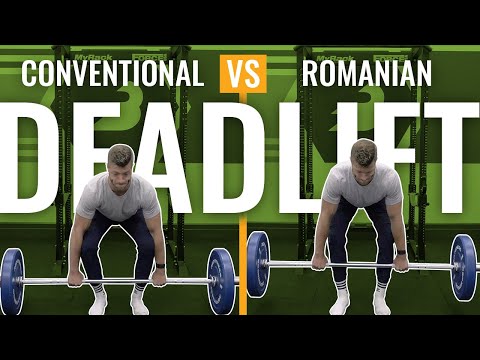
A Romanian deadlift begins from standing and uses relatively little knee movement as the hips travel backwards. A conventional deadlift begins from the floor and generally involves more knee bend. In an RDL, the bottom position depends on your controlled hip-hinge range, not on reaching the floor.
+Should you feel a Romanian deadlift in your lower back?
Your spinal erectors work to support your trunk, so some muscular effort there is expected. However, lower-back sensation alone does not establish whether your technique is appropriate. If your back becomes the limiting factor, reduce the load or range and ask a qualified coach to check your movement. Stop for sharp, radiating or worsening pain.
+Can beginners use dumbbells instead of a barbell?
Yes. Light dumbbells held close to the legs are a useful starting option. Practise the hip hinge without load first, then add resistance only when you can maintain balance, control the lowering phase and stand up without leaning backwards.
Also known as: RDL
Think of this exercise as moving your hips backwards against resistance, rather than bending down to touch the floor. The weight follows your hinge; it should not pull you into a deeper position than you can control.
- Stand with your feet approximately hip-width apart and hold the weight in front of your thighs.
- Soften your knees, brace your trunk and keep pressure distributed across your feet.
- Push your hips backwards, keeping the weight close to your legs and your knee angle relatively steady.
- Stop lowering before you need to round your back or bend your knees further to gain depth.
- Push through your feet and bring your hips forwards to stand tall. Finish upright rather than leaning backwards.
How can you scale the movement?
Start with an unloaded wall-tap hinge: stand a short distance in front of a wall, facing away, and move your hips backwards to touch it. Progress to light dumbbells and a shortened lowering range. Increase depth only while maintaining control; reaching mid-shin is not a requirement.
When should you stop a set?
End the set if your grip starts slipping, the weight drifts away from your legs or you can no longer control your trunk position. Reset and reduce the load or range rather than forcing more repetitions.
A hamstring stretching sensation can occur during the descent, but do not chase discomfort. Stop for sharp, radiating or worsening pain, numbness or sudden weakness. Persistent or recurring symptoms warrant assessment by a qualified healthcare professional; general technique guidance cannot determine their cause.