Glossary
What is a reverse lunge?
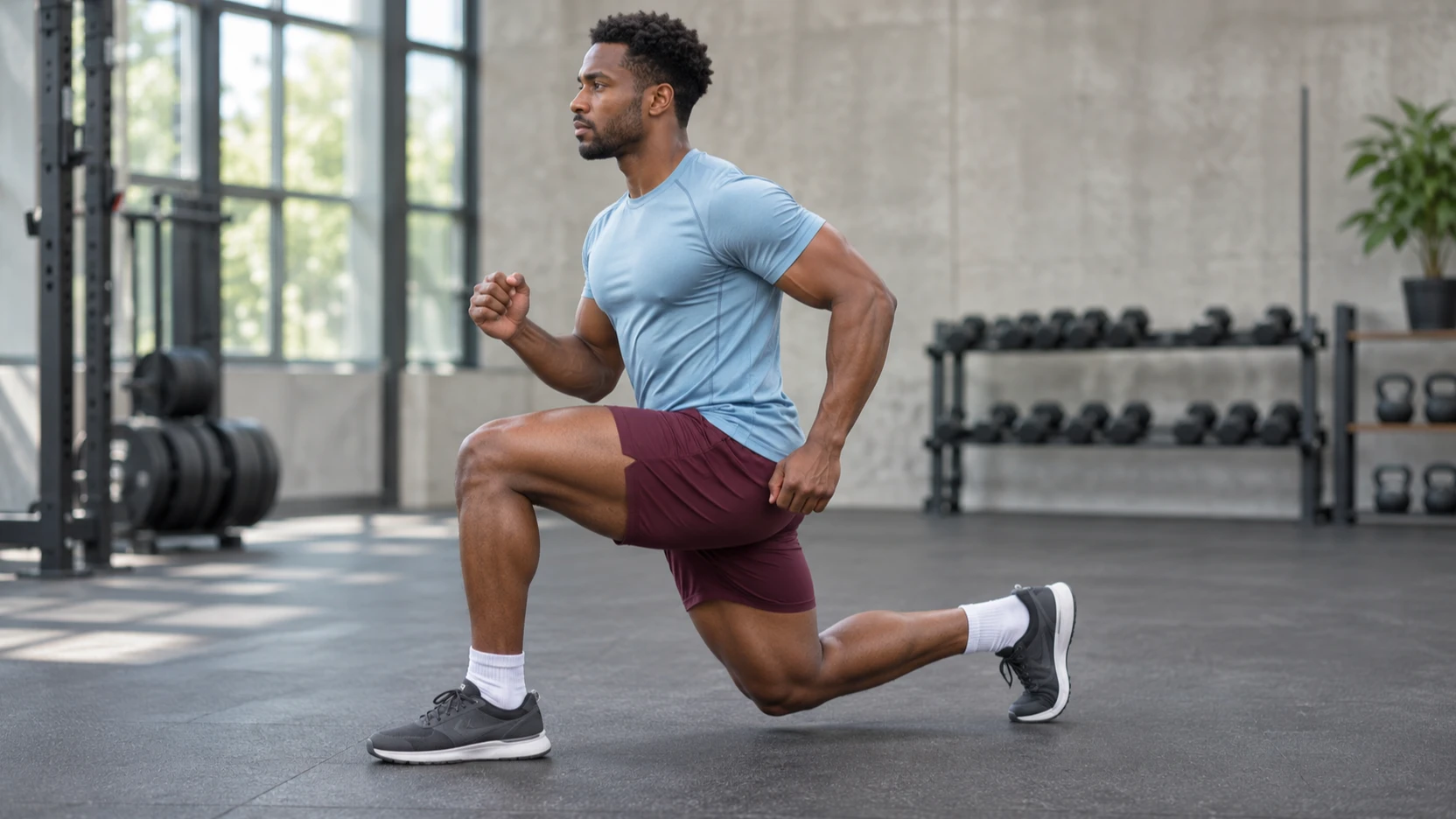
A reverse lunge is a lower-body exercise in which you step backwards, lower into a split stance, then return to standing. It trains the quadriceps and glutes while challenging balance and control. Athletes use it to build single-leg strength and practise managing load through one leg at a time.
A reverse lunge is a unilateral lower-body movement performed by stepping one foot backwards, bending both knees to lower the body, then returning the rear foot to the starting position. Both legs contribute, but the front leg is typically the main working leg.
Reverse lunges develop strength and control in a staggered stance. Training each side separately can reveal differences in balance, coordination or load tolerance that are less obvious during bilateral exercises. Those differences are useful training observations, not diagnoses.
The quadriceps at the front of the thigh help straighten the front knee as you rise. The gluteus maximus at the back of the hip helps extend the front hip. Muscles around the hip, ankle and trunk help control alignment and balance. Step length, trunk angle, depth and load placement change the demands, so there is no single stance that suits every athlete.
Options include a bodyweight reverse lunge, a goblet reverse lunge holding a weight at the chest, and a dumbbell reverse lunge with weights at the sides. You can alternate legs or complete the planned repetitions on one side before switching. Count repetitions per front, working leg.
As an example starting point for a strength accessory, perform 2–3 sets of 6–10 controlled repetitions per leg, finishing with roughly two good repetitions still available. Rest enough to preserve technique. Add repetitions or load gradually rather than increasing both at once, and avoid rushing the backward step.
Reverse lunges can support the single-leg strength needed for HYROX sandbag lunges. They do not replace forward walking-lunge practice: stepping direction, load position and repeated forward travel create different demands. Use them as an accessory alongside event-specific preparation.
+What is the difference between a reverse lunge and a split squat?
A reverse lunge includes a backward step and a return to standing on each repetition. In a standard split squat, your feet remain in a staggered stance while you lower and rise. Both train the front leg, but the lunge adds a stepping and balance demand.
+Should your front knee stay behind your toes?
Not necessarily. The knee can travel beyond the toes depending on your proportions, step length and available ankle movement. Keep the front foot planted and let the knee track broadly in line with the toes rather than forcing a vertical shin.
+Can you make reverse lunges easier without removing them?
Yes. Use bodyweight, hold a stable support and reduce the lowering depth to a range you can control comfortably. If stepping still disrupts your balance, a supported split squat is a useful regression, although it is a different exercise.
Also known as: backward lunge, backwards lunge
The reverse lunge is the backward-stepping version of a lunge. Aim for a controlled descent and a steady return to standing, rather than reaching backwards as far as possible.
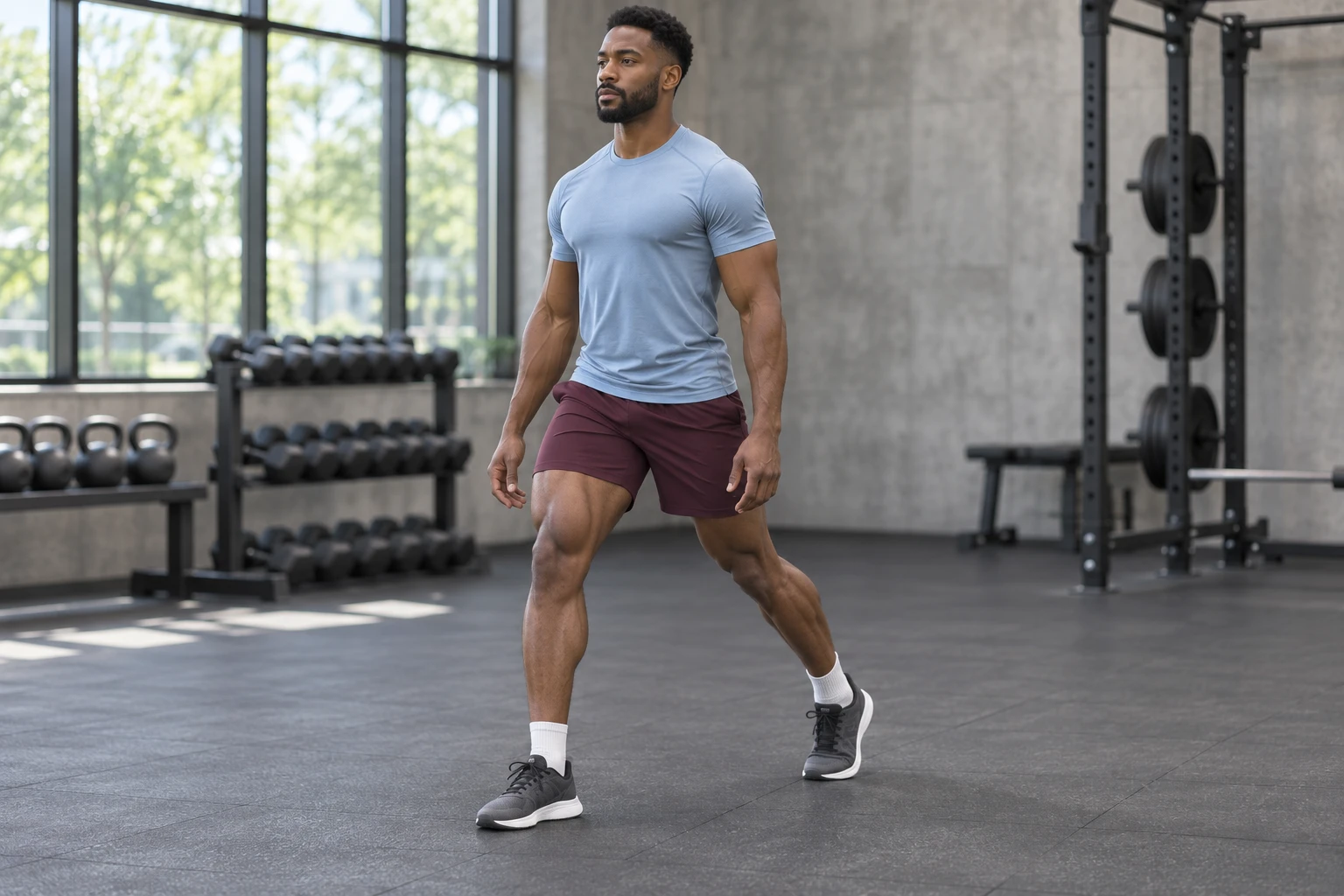
- Stand with your feet roughly hip-width apart and your trunk controlled.
- Step one foot backwards, keeping some sideways space between your feet rather than placing them on a tightrope.
- Bend both knees and lower within a comfortable, controlled range. The rear knee can approach the floor without striking it.
- Keep the front foot planted, with pressure shared across the heel and forefoot. Let the front knee follow the direction of the toes.
- Push through the front foot to rise and bring the rear foot forwards. Finish balanced before starting the next repetition.
How should you scale the movement?
Start without added weight. If balance limits the movement, hold a rack or another stable support. Reduce depth if you cannot keep the front foot planted or control the descent. Build a repeatable movement before adding dumbbells or a goblet load.
When should you stop the set?
End the set if repeated wobbling, an uncontrolled descent or loss of foot contact prevents you completing consistent repetitions. Reduce the load or choose a supported version before continuing. Stop the exercise for sharp or worsening pain, dizziness or a joint giving way. Persistent or recurring symptoms warrant advice from a qualified healthcare professional rather than further loading.