Glossary
Goblet squat
Goblet squat
Pronounced: GOB-lit SKWOT
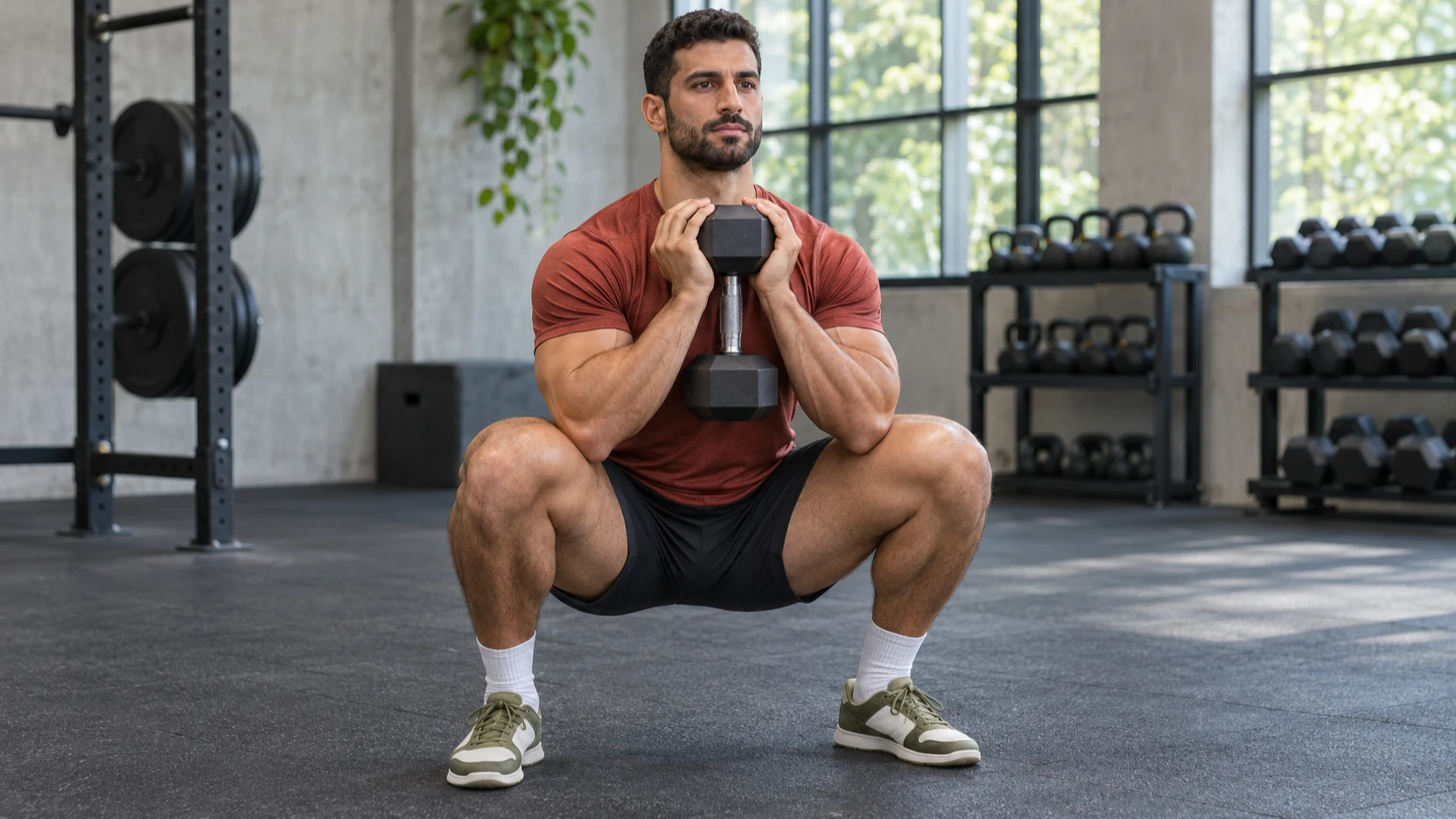
A goblet squat is a squat performed while holding a kettlebell or dumbbell close to the chest with both hands. It trains the thighs and glutes while challenging trunk control. Athletes use it to learn squat technique, build lower-body strength and add manageable resistance to conditioning sessions.
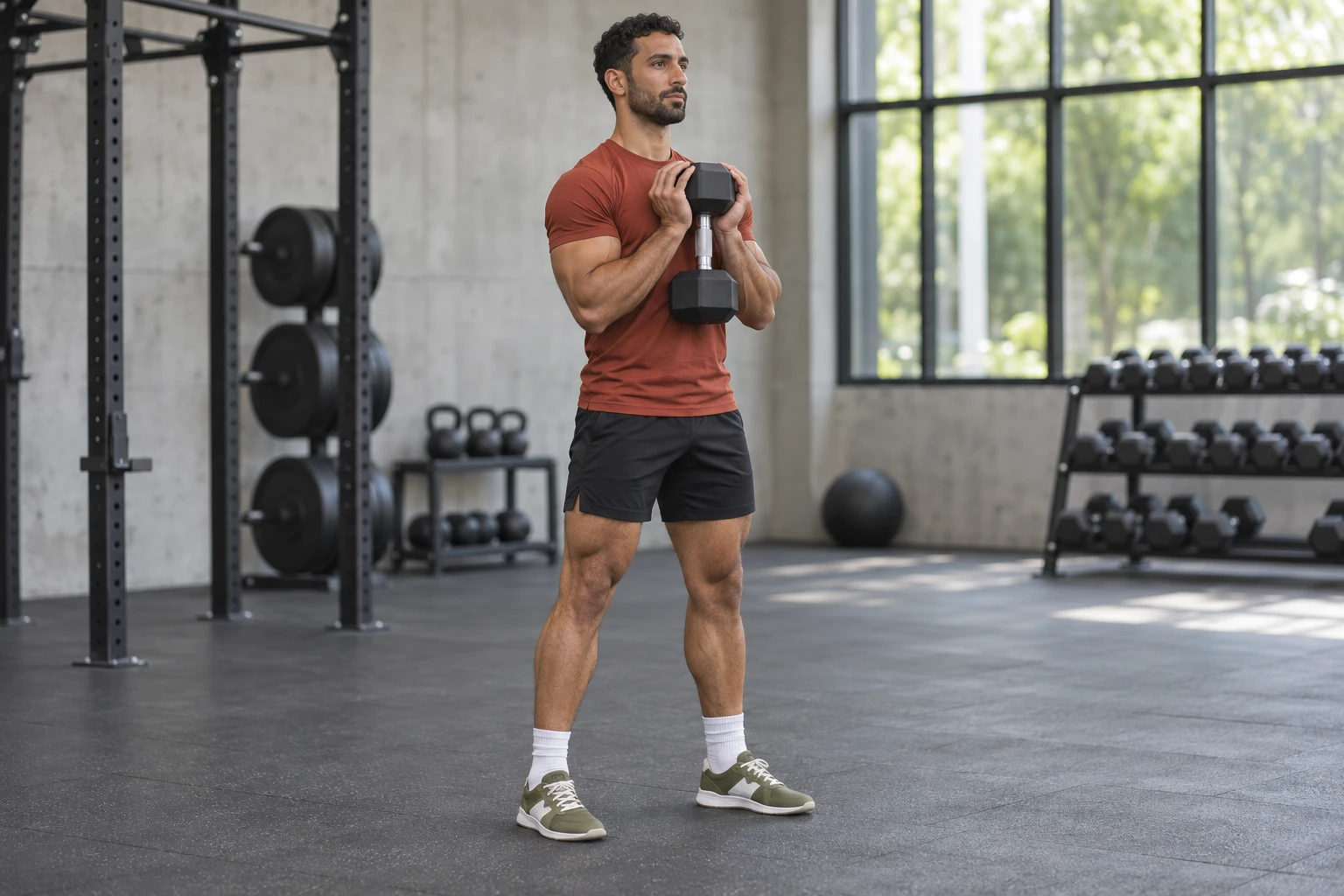
A goblet squat is a loaded squat with a single kettlebell or dumbbell held in front of the chest using both hands. The hips and knees bend during the descent and extend as the athlete stands.
The front-held load provides a useful way to practise squatting under resistance without placing a barbell on the shoulders. It develops leg strength alongside the ability to maintain trunk position, but athletes should distinguish leg fatigue from fatigue caused by holding the weight.
The load sits in front of the torso, changing the balance demands compared with an unloaded squat or back squat. Some athletes find this helps them sit between their hips and maintain a more upright torso. It does not guarantee perfect technique: stance, limb proportions, ankle mobility and load all influence the movement. Allowing the knees to travel forwards over the toes is not automatically a fault.
Examples include a kettlebell goblet squat held by the handles, a dumbbell goblet squat supported securely beneath its upper end, and a goblet squat to a box used as a consistent depth target. The box should be touched under control rather than used to drop onto or rock off.
For a starting strength session, try 2–3 sets of 6–10 controlled repetitions with a load that leaves a few technically sound repetitions available. Rest enough to repeat the same quality. Increase repetitions or load gradually, rather than increasing both at once. In circuits, end the set before grip fatigue or breathlessness disrupts technique.
Goblet squats can support general leg strength and front-loaded squat control for HYROX preparation. They may complement wall-ball practice, but they do not reproduce the throw, catch or event-specific demands. Use them as assistance work rather than a replacement for practising the actual race movements.
+Which muscles does a goblet squat work?
The quadriceps extend the knees, while the gluteus maximus and other hip extensors help straighten the hips. Trunk muscles stabilise the torso, and the arms and upper back maintain the front-held load.
+How deep should a goblet squat be?
Descend as far as you can comfortably control while keeping the whole foot grounded and the load secure. There is no single required depth for general training. Reduce depth if you lose balance, control or a comfortable position.
+Can goblet squats replace barbell squats?
They can be a useful alternative when equipment, experience or preference makes barbell squatting unsuitable. However, holding the weight may become the limiting factor before leg strength does, so goblet squats are not an identical substitute for heavy barbell training.
Also known as: goblet loaded squat
The goblet squat places one weight close to your chest while you squat. Start light enough to control both the movement and the hold; the aim is a repeatable squat, not simply getting the weight back up.
- Choose a comfortable stance around shoulder width, adjusting foot angle to suit your hips.
- Hold the weight securely against or close to your chest, with elbows pointing down.
- Brace your trunk and bend through the hips and knees, keeping pressure across the whole foot.
- Let your knees follow the direction of your toes and descend to a controlled, comfortable depth.
- Push through the floor to stand, keeping the weight close rather than leaning backwards at the top.
How can you scale the movement?
Reduce the load first if the weight pulls you forwards or your arms cannot maintain the hold. Use an unloaded squat if necessary. A stable box or bench can provide a shallower depth target; choose a height you can reach without collapsing onto it.
When should you stop a set?
Stop and put the weight down safely if your grip slips, you repeatedly lose balance or you cannot control the descent. Do not push through sharp or increasing pain, dizziness or unusual breathlessness. Persistent or recurring symptoms warrant advice from a qualified healthcare professional rather than repeated technique adjustments.