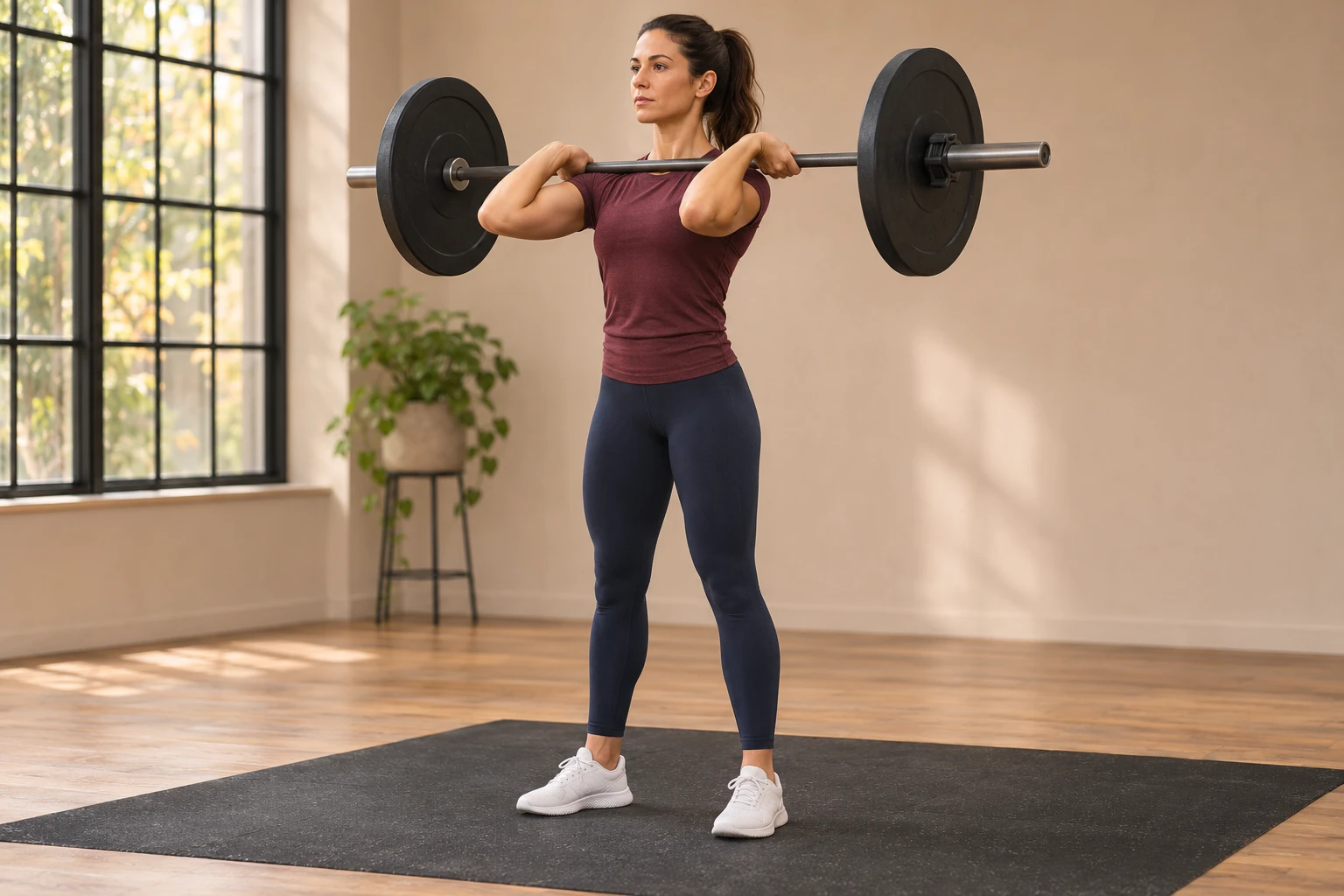
A front squat is a squat performed with a barbell resting across the front of the shoulders. It trains the quadriceps and glutes while challenging trunk strength and control. Athletes use it to develop lower-body strength, practise bracing and build capacity for tasks involving loaded knee and hip extension.
Definition
A front squat is a loaded squat with a barbell supported across the front of the shoulders in a front-rack position. The athlete bends at the hips and knees to lower, then extends them to stand, keeping the combined body-and-bar load balanced over the feet.
Why it matters
It develops lower-body strength while requiring the athlete to maintain a stable trunk under a front-loaded bar. Understanding the movement helps athletes distinguish a leg-strength limitation from difficulty holding the rack position, choosing a suitable load rather than forcing heavier repetitions.
Deeper explanation
The bar position generally requires a more upright torso than a back squat to maintain balance. This does not mean the torso must remain vertical: limb proportions, stance and available movement affect the position. The quadriceps straighten the knees, the glutes contribute to straightening the hips, and the trunk and upper back resist unwanted movement. A secure shoulder shelf supports the bar; the wrists should not carry its full weight.
Examples
An athlete might perform controlled barbell front squats early in a strength session, before conditioning. Someone learning the pattern could begin with a light goblet squat, then practise the front rack with a light training bar. The goblet squat is a useful progression, not an identical exercise.
How to programme it
An example starting structure for an athlete already comfortable with the movement is 2–3 sets of 4–6 repetitions, resting 2–3 minutes between sets. Choose a load that leaves roughly 2–3 technically sound repetitions in reserve. Add load only when balance, depth and rack position remain consistent; these numbers are a coaching example, not a universal prescription.
In HYROX and hybrid racing
Front squats can support the leg strength and trunk control used in wall balls and loaded lunges. They do not replace practice of those movements, running or event-specific conditioning. Keep demanding squat work far enough from key sessions that residual leg fatigue does not undermine their purpose.
FAQs
+Which muscles does a front squat work?
The quadriceps extend the knees and the glutes contribute to hip extension. The adductors also assist, while the trunk and upper-back muscles help maintain the torso and bar position.
+Do you need a full-hand grip for a front squat?
Not necessarily. In a clean-style front rack, the bar rests on the front of the shoulders and the fingers help stabilise it. Do not force a grip that causes wrist pain. A crossed-arm rack may be an option if it provides secure, comfortable support.
+Is a front squat better than a back squat?
Neither is universally better. A front squat generally encourages a more upright torso and athletes commonly use less load than in a back squat. Choose according to your goals, experience and ability to hold the bar comfortably and securely.
Also known as: barbell front squat
How do you perform a front squat?
The front squat places the bar across the front of your shoulders rather than your upper back. Start in a rack with suitable safety arms or pins, positioned to catch the bar below your intended squat depth.
Set the bar at a height you can unrack without rising onto your toes. Establish a secure shoulder shelf and grip.
Brace your trunk, stand to clear the hooks and take a small, controlled step back.
Keep your whole foot in contact with the floor. Bend your knees and hips together, allowing the knees to follow the direction of your toes.
Lower to a depth you can control without losing balance or the rack position. Knees travelling beyond the toes is not automatically a fault.
Push through the floor to stand, keeping your hips and shoulders rising together. Re-establish your brace before the next repetition.
How can you scale the movement?
Reduce the load first if your elbows drop and the bar starts rolling forward. A light goblet squat can simplify loading while you learn the squat pattern. If depth is the limiting factor, use a controlled, shorter range and gradually expand it as your movement allows.
For front-rack difficulty, practise with a light bar and seek coaching on grip and positioning. Do not force your wrists or shoulders into a painful position simply to copy someone else's technique.
When should you stop a set?
End the set if you cannot keep the bar securely supported, your balance repeatedly shifts or you can no longer control the descent. Stop for sharp or increasing pain, numbness, dizziness or unusual breathlessness. Persistent or recurring symptoms warrant assessment by a qualified healthcare professional rather than repeated attempts with the same load.