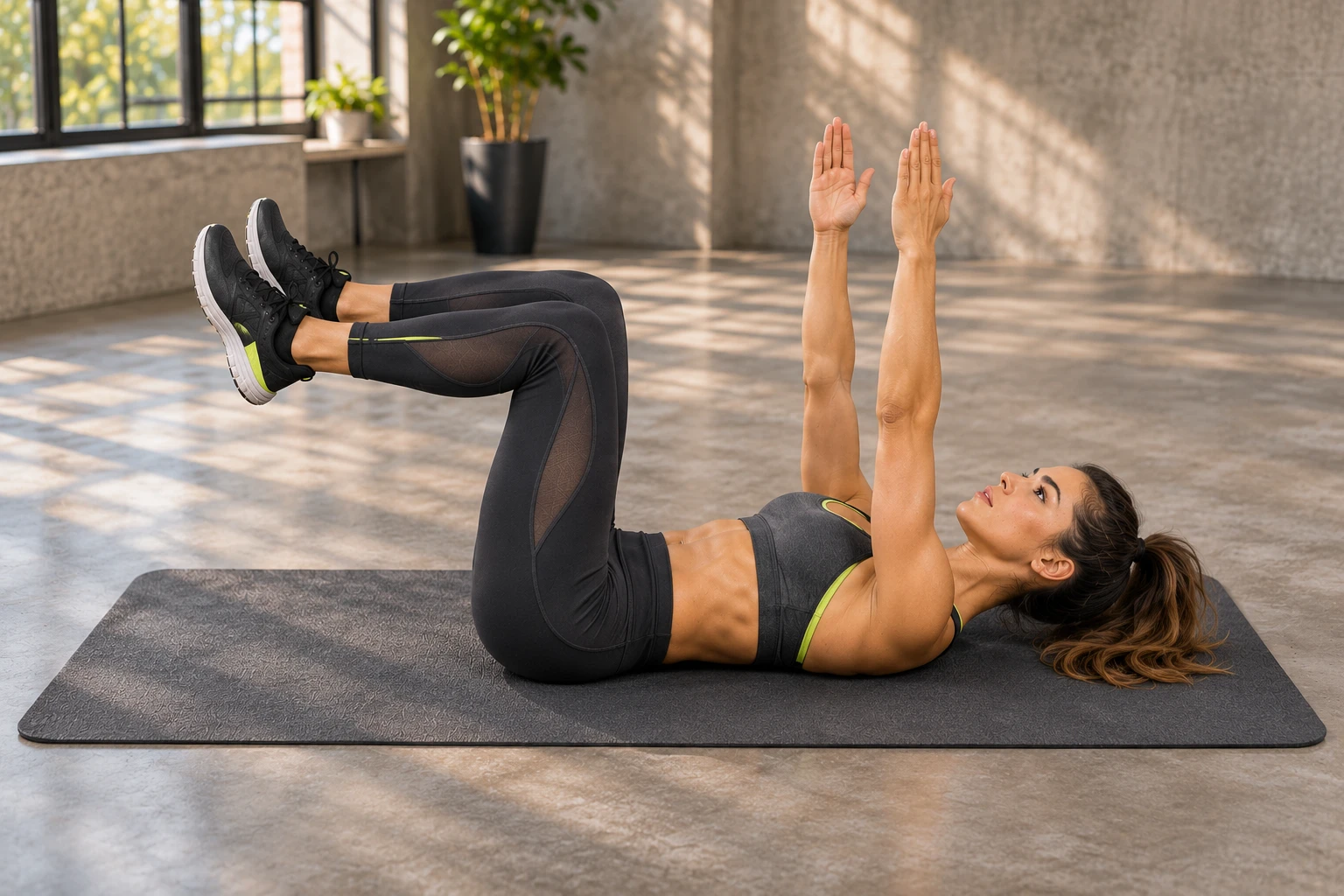
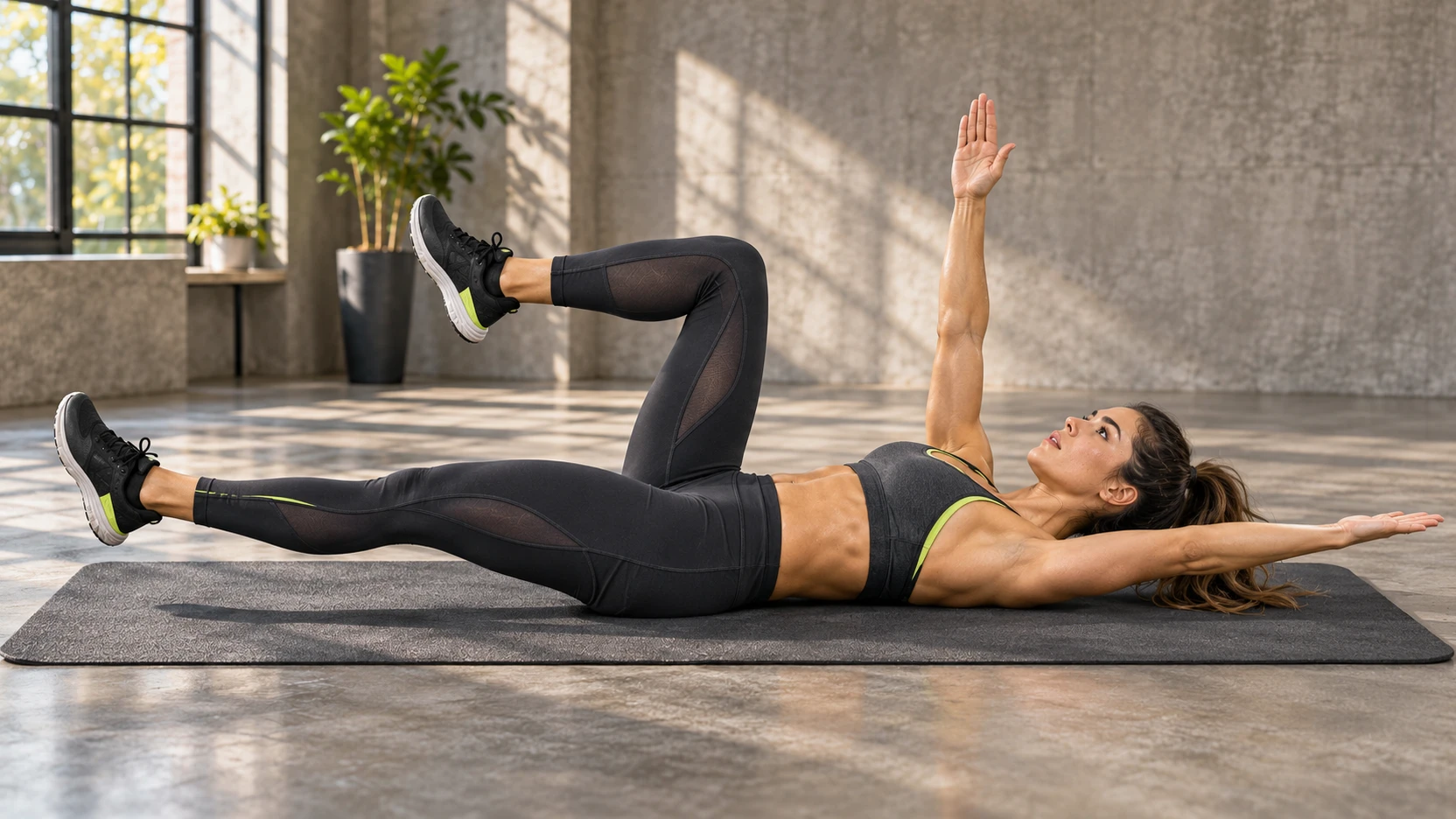
A dead bug is a floor-based trunk-control exercise performed lying on your back, usually lowering opposite arms and legs while keeping your pelvis and lower back steady. It trains resistance to unwanted spinal extension and helps athletes practise moving their limbs without losing control of their trunk.
Definition
The dead bug is a supine, or face-up, exercise in which the limbs move while the trunk remains relatively still. In its common alternating version, the opposite arm and leg lower together from a raised starting position. Its main training purpose is anti-extension: resisting an unwanted increase in the lower-back arch.
Why it matters
Athletes need to control their trunk while their limbs produce movement. The dead bug offers a low-load way to practise that coordination and maintain abdominal tension without holding the breath. It is useful preparation, but it does not replace loaded strength work or sport-specific practice.
Deeper explanation
As a leg reaches farther from the hips towards the floor, its weight creates a larger turning effect that the trunk muscles must counter to limit pelvic and spinal movement. Reaching an arm overhead adds another challenge. The abdominal muscles work largely isometrically to stabilise the trunk, while muscles around the hips and shoulders move or support the limbs. The aim is controlled movement, not reaching the floor at any cost.
Examples
A basic version alternates opposite-arm and bent-knee leg reaches. A longer-lever version straightens the moving leg as it lowers. An easier heel-slide version starts with both feet on the floor and moves one heel away while the arms remain still.
How to programme it
As an example starting point, use 1–3 sets of 4–8 controlled repetitions per side during a warm-up or accessory block. Lower slowly, return under control and reset when needed. End the set when position or breathing deteriorates. Progress one variable at a time: reach farther, straighten the moving leg or add a brief pause before adding repetitions.
In HYROX and hybrid racing
The dead bug can help HYROX athletes rehearse trunk control before running, carries and sled work. However, a floor-based drill cannot reproduce the upright loading, force demands or fatigue of those tasks. Pair it with appropriate running and station practice rather than treating it as a complete core programme.
FAQs
+Should your lower back stay flat during a dead bug?
A gently flattened lower back is a useful coaching option, but forcefully pressing it into the floor is unnecessary. Start in a comfortable position and avoid an increasing arch as your limbs lower. Shorten the reach if you cannot maintain that position.
+How is a dead bug different from a sit-up?
A sit-up involves lifting the torso through spinal flexion and hip flexion. A dead bug primarily challenges the trunk muscles to resist movement while the arms and legs move. They train different actions rather than being interchangeable exercises.
+What is an easier version of a dead bug?
Keep both feet on the floor and move one arm overhead at a time. Alternatively, keep your arms still and slide one heel away along the floor. Use only the range in which you can breathe comfortably and keep your pelvis steady.
Also known as: dead bug exercise
How do you perform a dead bug?
The dead bug is a trunk-control drill, not a race to lower your limbs as far as possible. A good repetition keeps your starting back and pelvis position steady while your opposite arm and leg move away from your body.
Lie on your back with your arms pointing towards the ceiling. Lift your legs so your hips and knees are bent to roughly right angles.
Settle your ribs over your pelvis and gently tense your abdominal muscles. Keep your neck relaxed.
Slowly reach one arm overhead while lowering the opposite leg. Begin with the knee bent if needed.
Stop the reach before your back arches further, your ribs flare or your pelvis rotates.
Return to the start and change sides. Keep breathing; a slow exhale during the reach can help.
How can you adjust the difficulty?
Make the movement smaller before trying to brace harder. Keep the moving arm closer to vertical, lower the leg less or practise one limb at a time. If holding both legs up is too demanding, use the feet-supported heel-slide version.
Once every repetition is consistent, gradually increase the reach. Only use a straight-leg version when you can prevent the longer lever from pulling your pelvis out of position.
When should you stop the set?
End the set if you repeatedly lose trunk position, need momentum or cannot breathe comfortably. Stop the exercise if it causes pain, numbness, tingling or dizziness. Do not push through these symptoms; persistent or recurring symptoms warrant advice from a qualified healthcare professional.