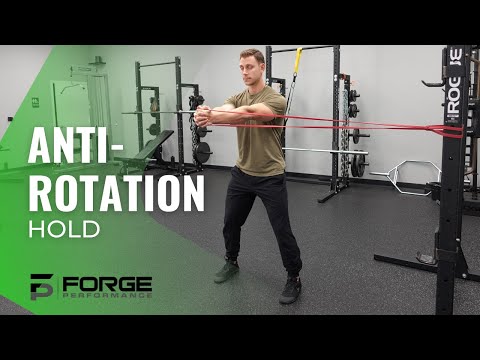
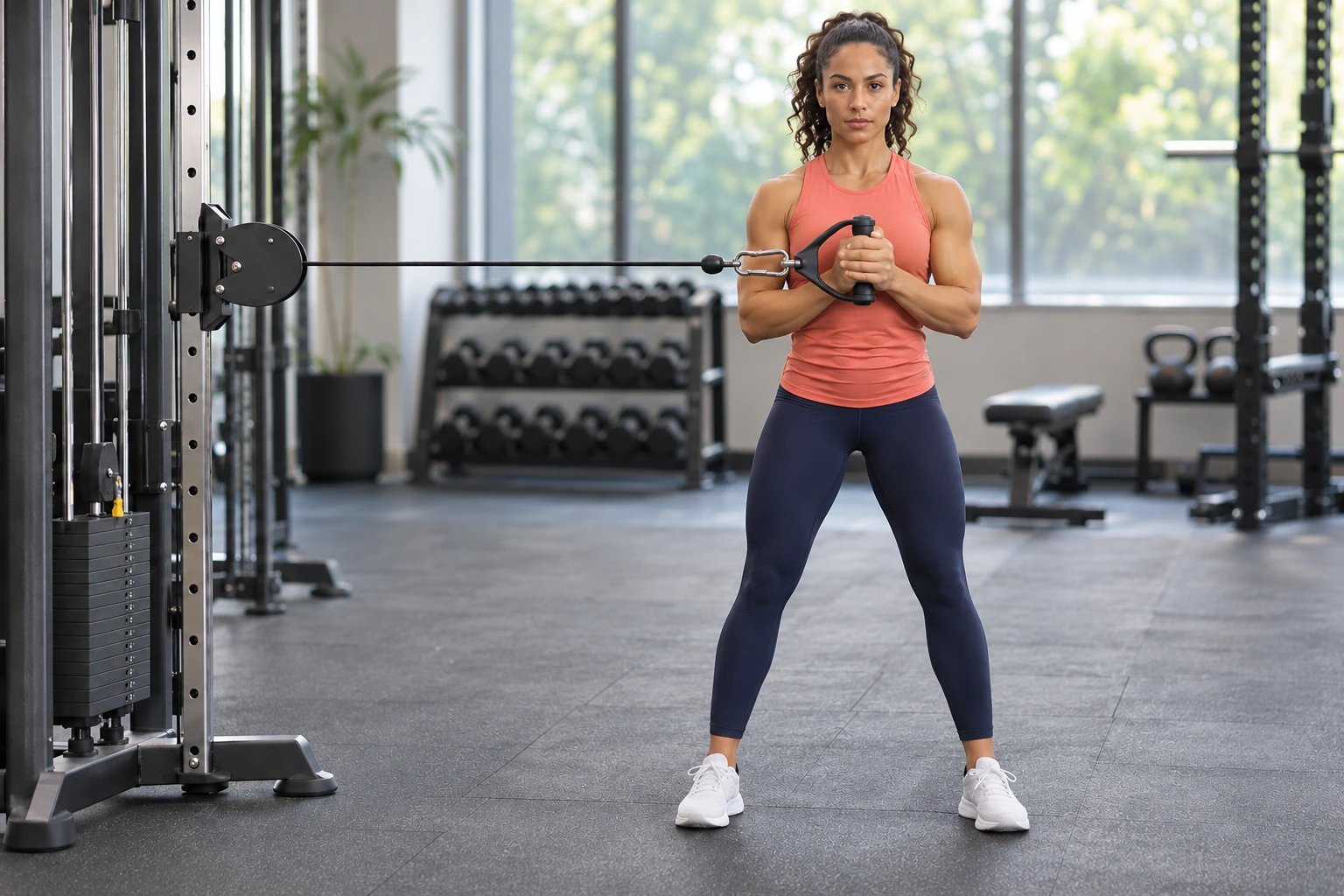
Anti-rotation training develops your ability to resist unwanted twisting when an external force tries to rotate your trunk. Exercises such as Pallof presses and controlled shoulder taps challenge this skill. Athletes use it to maintain position, transfer force and control uneven loads without treating all rotation as something to avoid.
Definition
Anti-rotation training is exercise in which the trunk muscles resist an external rotational demand, limiting unwanted twisting between the ribcage and pelvis. The objective is controlled positioning, rather than deliberately producing trunk rotation.
Why it matters
Uneven loads and changing support positions can pull athletes out of alignment. Learning to resist that pull can support controlled lifting, carrying and single-limb tasks. This is one component of trunk training, not a replacement for strength work, sport practice or exercises that deliberately produce rotation.
Deeper explanation
In a Pallof press, a cable or band pulls from one side while you face forwards. Pressing your hands away from your chest generally increases the rotational demand by increasing the perpendicular distance between the force's line of action and the trunk's axis of rotation. The obliques and other trunk muscles work together to oppose that demand. Your arms can move while your trunk stays relatively still, so an anti-rotation exercise does not have to be a static hold.
Examples
A standing Pallof press uses sideways band or cable resistance to challenge trunk control. A high-plank shoulder tap removes one hand from the floor, requiring you to limit pelvic rotation as you change support. A single-arm cable row can also include an anti-rotation demand when you deliberately keep your torso facing forwards throughout the pull.
How to programme it
Use a small amount of anti-rotation work as an accessory rather than allowing it to compromise your main lifts or running session. An example starting point is two sets of six to ten controlled Pallof presses per side with light resistance. Match the sides and end each set when you can no longer maintain the intended position. Progress one variable at a time: resistance, reach, repetitions or support position.
In HYROX and hybrid racing
Anti-rotation work can complement the trunk control needed during loaded lunges and carries, particularly when fatigue makes movement less consistent. HYROX demands more than resistance to twisting, however: athletes also need to manage forward, backward and sideways forces. Keep station practice and running central to preparation; Pallof presses are an accessory, not a substitute.
FAQs
+Is anti-rotation training the same as bracing?
No. Bracing is the muscular action used to stiffen and support the trunk. Anti-rotation describes a task: resisting a force that would otherwise twist you. Bracing can help you perform that task, but it also supports movements with no substantial rotational challenge.
+Should runners try to eliminate trunk rotation?
No. Some rotation is a normal part of running. Anti-rotation exercises develop control against an external challenge; they do not mean you should run with a rigid torso or suppress natural arm swing.
+How heavy should a Pallof press be?
Choose resistance that lets you extend your arms while keeping your ribs and pelvis facing forwards and breathing steadily. If you twist, lean or cannot control the return, reduce the resistance or shorten the reach.
Also known as: Anti-rotational training, Rotational stability training
What does anti-rotation training look like?
The defining feature is a twisting force that you actively resist. Simply holding your torso still does not automatically make an exercise anti-rotation: there must be a meaningful rotational challenge. The aim is to control that challenge without compensating by leaning or turning.
How do you perform and scale a Pallof press?
Secure a band to a suitable anchor around chest height, or use a cable machine. Stand side-on with the handle held at your chest.
Set your feet in a stable stance with softly bent knees. Keep your ribs above your pelvis rather than arching backwards.
Press your hands forwards while resisting the sideways pull. Pause briefly, then return under control. Continue breathing.
To scale down, reduce the cable load, use a lighter band or move closer to the band anchor. Shorten the press if a full reach causes twisting.
To progress, extend your reach or increase resistance slightly while maintaining the same position. Do not increase both at once.
How should you scale shoulder taps?
Place your hands on a sturdy raised surface and widen your feet to make the task easier. Shift support deliberately, tap the opposite shoulder and replace your hand without rushing. Progress towards a lower surface or narrower foot position only when you can limit pelvic twisting. Avoid transferring this particular progression to every exercise: stance changes affect different movements differently.
When should you stop the set?
End the set when repeated twisting, sagging, leaning or breath-holding replaces controlled movement. For shoulder taps, also stop if you cannot support yourself securely through the planted arm. Stop exercising if you develop sharp or increasing pain, numbness or dizziness. Persistent or recurring symptoms warrant advice from a qualified healthcare professional rather than repeated attempts to train through them.