
Articles
Yoga or Pilates? Running Experts Weigh Up the Benefits for Hybrid Athletes
A Runner’s World comparison gives Pilates a slight advantage for running support, while highlighting yoga’s value for mobility and recovery. For hybrid athletes, both should complement not replace strength work.
By Relentless Bravery ·
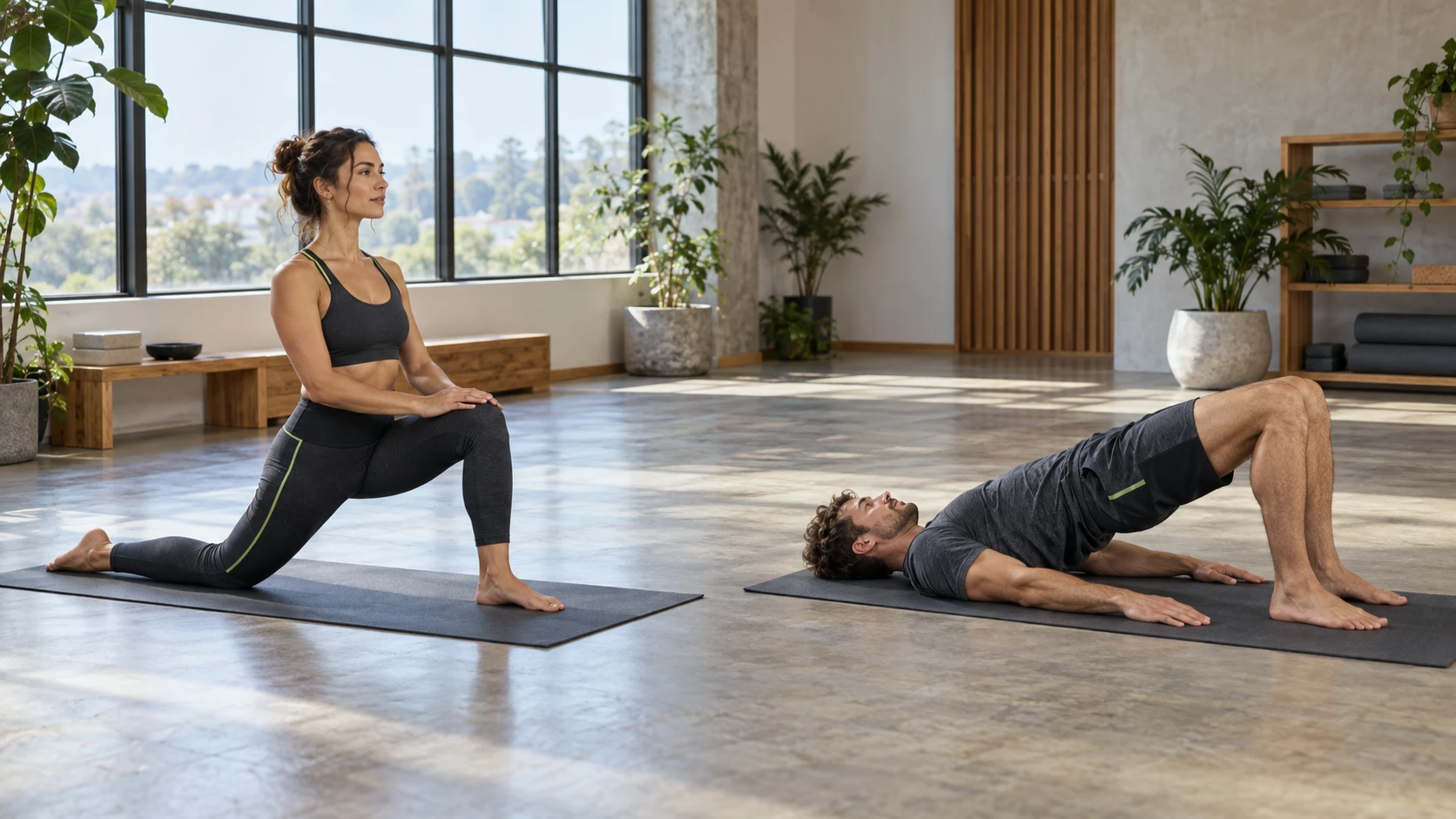
Pilates may offer runners a slight advantage over yoga as a supporting workout, according to experts featured in a Runner’s World comparison. But the recommendation comes with important qualifications: neither practice suits every training need, and Pilates should not automatically replace conventional strength training.
Written by Danielle Zickl, the article brings together Olympic runner Shannon Rowbury and instructors Shavonne Wood and Theresa DeLorenzo. For athletes preparing for HYROX or hybrid racing, its relevance is clear: choose additional sessions for the support they provide, rather than simply adding more exercise. The advice concerns runners, however, rather than demonstrated HYROX race outcomes.
Why supporting work matters
Rowbury, a three-time US Olympic middle-distance runner and BowFlex fitness adviser, explains that running’s repetitive, largely one-directional movement can allow muscular imbalances to develop and become more pronounced over time.
Low-impact cross-training offers a way to reduce some of the repeated pounding while working muscles that stronger, more dominant muscle groups can overshadow. Both yoga and Pilates can serve that purpose, although their emphasis differs.
Wood, a certified yoga and Pilates instructor and marathon runner, gives Pilates a narrow preference because it combines strength, stability and movement control. It can also include mobility and stretching, making the choice less clear-cut than strength versus flexibility.

Pilates has promise, but keep the strength work
Rowbury describes Pilates as helping her coordinate strength she already possessed. Running involves the arms counterbalancing the legs, with force transferred through the core; she credits Pilates with improving that connection.
She began practising after childbirth in 2018. Following around a year of consistent work, she reported running faster 200-metre efforts at 34 than she had during earlier stages of her running career. That is her personal experience, not a guarantee for other athletes.
The article also cites a small 2018 study published in PLOS One. Participants who completed a 12-week Pilates programme subsequently ran a faster 5K than those who did not do Pilates.
For hybrid athletes, the important boundary is Wood’s warning about substitution. Runners still benefit from progressive resistance training and suitable loading of muscles and bones. Pilates belongs alongside that work, rather than being treated as a complete replacement.
Yoga’s value depends on the session
Wood highlights yoga’s potential benefits for mobility, balance, body awareness and recovery. It provides structured movement through different ranges, rather than relying solely on a few stretches after running. It can also offer time away from pace, distance and heart-rate targets.
DeLorenzo, a yoga therapist, Pilates instructor and owner of Nutrition for Optimal Performance, says greater body awareness can help runners recognise when to ease back or rest.
Yet yoga is not automatically recovery work. Wood distinguishes gentle mobility sessions from demanding power classes and warns that greater flexibility is not always the goal. Already-mobile runners may benefit more from control and strength within their existing range.
Rowbury also cautions against yoga involving prolonged static holds before speed work, because runners need tendon tension for an effective spring-like action.
- Match the class to your ability, injury history and total training load; both disciplines vary in intensity and quality.
- Treat Rowbury’s suggested one or two weekly Pilates sessions and two or three yoga sessions as her recommendation, not a HYROX-specific prescription.
- Choose something you enjoy enough to maintain. Wood places consistency ahead of selecting a theoretically ideal activity.
- Seek healthcare approval before starting a new routine, particularly where existing back or neck injuries are a concern.
The takeaway is to select support work with a purpose: Pilates for strength, stability and coordination, or yoga for mobility, awareness and space away from performance targets. Neither needs to become another competitive task. Reporting and expert guidance are drawn from Runner’s World.
This story is based on reporting from the original source.
Tagged