
Challenge · 2025
#74: 100 V-Ups for Core Power and Precision
Crush your core with 100 V-ups. A powerful movement for developing strength, flexibility, and total-body coordination in every rep.
By Editorial Team · · Updated

Some core movements burn. Some build. The V-up does both and fast. It challenges your hip flexors, your abdominal wall, and your timing all in one compact, high-effort movement.
In this RB100 Challenge, your goal is to complete 100 V-ups, breaking them into quality sets while maintaining control, speed, and form.
The result? Stronger abs, sharper body control, and better carryover to everything from gymnastics to sprinting to overhead lifting.
“Every rep is a moment of control between chaos and collapse. V-ups demand presence.” — RB100.Fitness
The Challenge Format
- Reps: 100 total
- Suggested Sets: 5 × 20
- 10 × 10
- 4 × 25
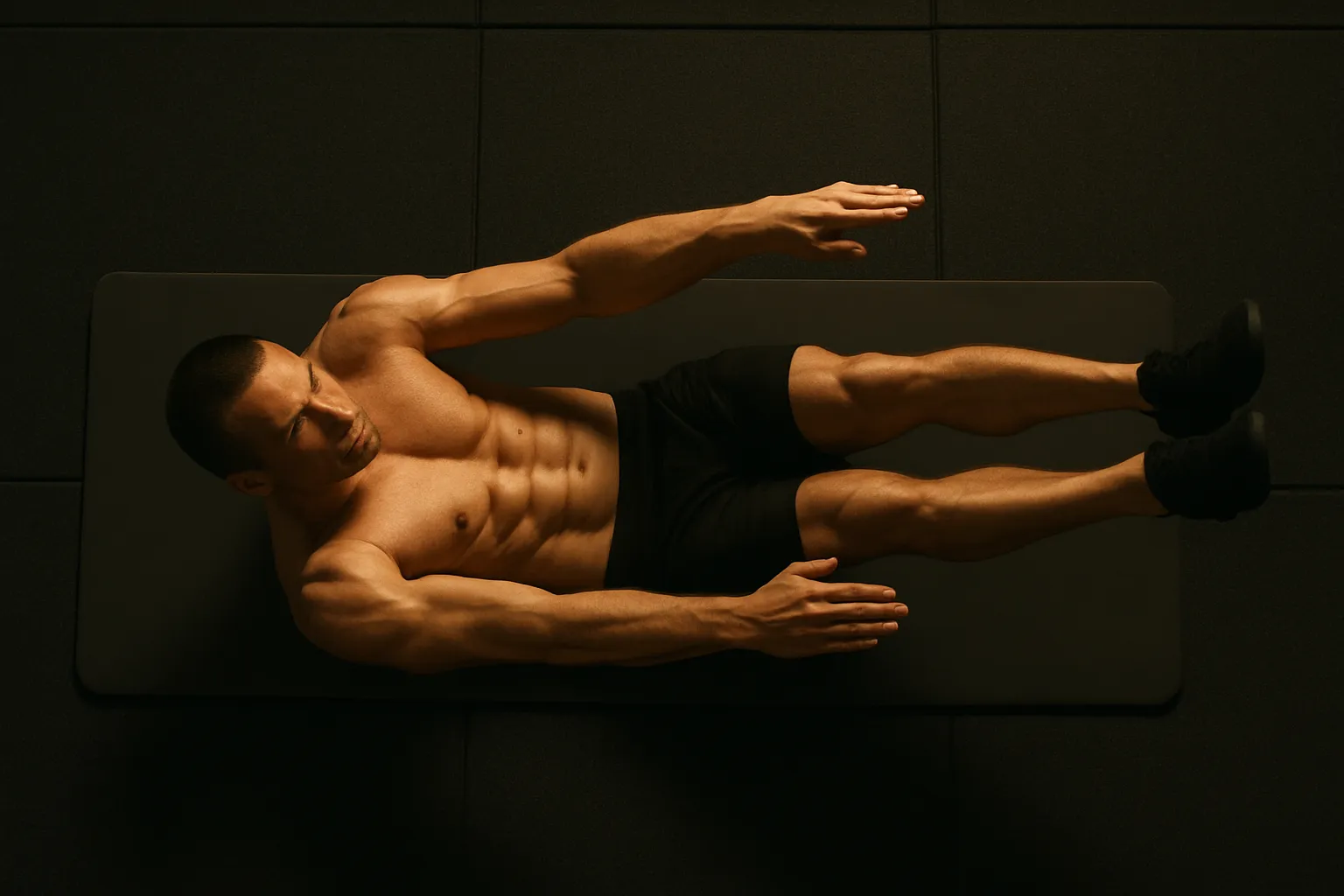
- Standard: Legs and arms stay straight, toes and hands meet above the torso at top
Start lying flat, arms extended behind your head, legs fully straight. Simultaneously raise your arms and legs to meet over your hips. Return under control to the floor.
No bouncing. No flopping. You want crisp, controlled motion every time.
Log your performance in the RB100 Tracker.
Why V-Ups Work
The V-up is a classic gymnastics movement that combines core flexion with coordination and control. It hits:
- Rectus abdominis (the six-pack muscles)
- Hip flexors and quads
- Deep core stabilisers
- Shoulder and trunk alignment
It also trains explosive trunk power the kind of strength needed for toes-to-bar, sit-outs, L-sits, and even jumping mechanics.
Progressions & Pairings
- Easier: Bend knees slightly or perform tuck-ups
- Harder: Add light ankle weights or hold a medicine ball
- Pair with: #72: Hollow Body Rocks for burn
- #71: Jumping Lunges for a core + leg killer
- #75: Toes-to-Bar Reps
Use as a finisher to any upper-body day, or as part of a full-body movement warm-up sequence.
Form Tips
- Breathe out at the top of the movement to brace deeper
- Squeeze quads to keep legs straight
- Start slower to learn control, then increase speed
- Avoid collapsing down lower under tension