
Articles
How Much Strength Training Is Enough for Hybrid Athletes?
Two strength sessions a week can be a useful starting point, but building muscle, maintaining gains and supporting running require different approaches. Trainers explain how to match your lifting commitment to your goal.
By Rachel Branson ·
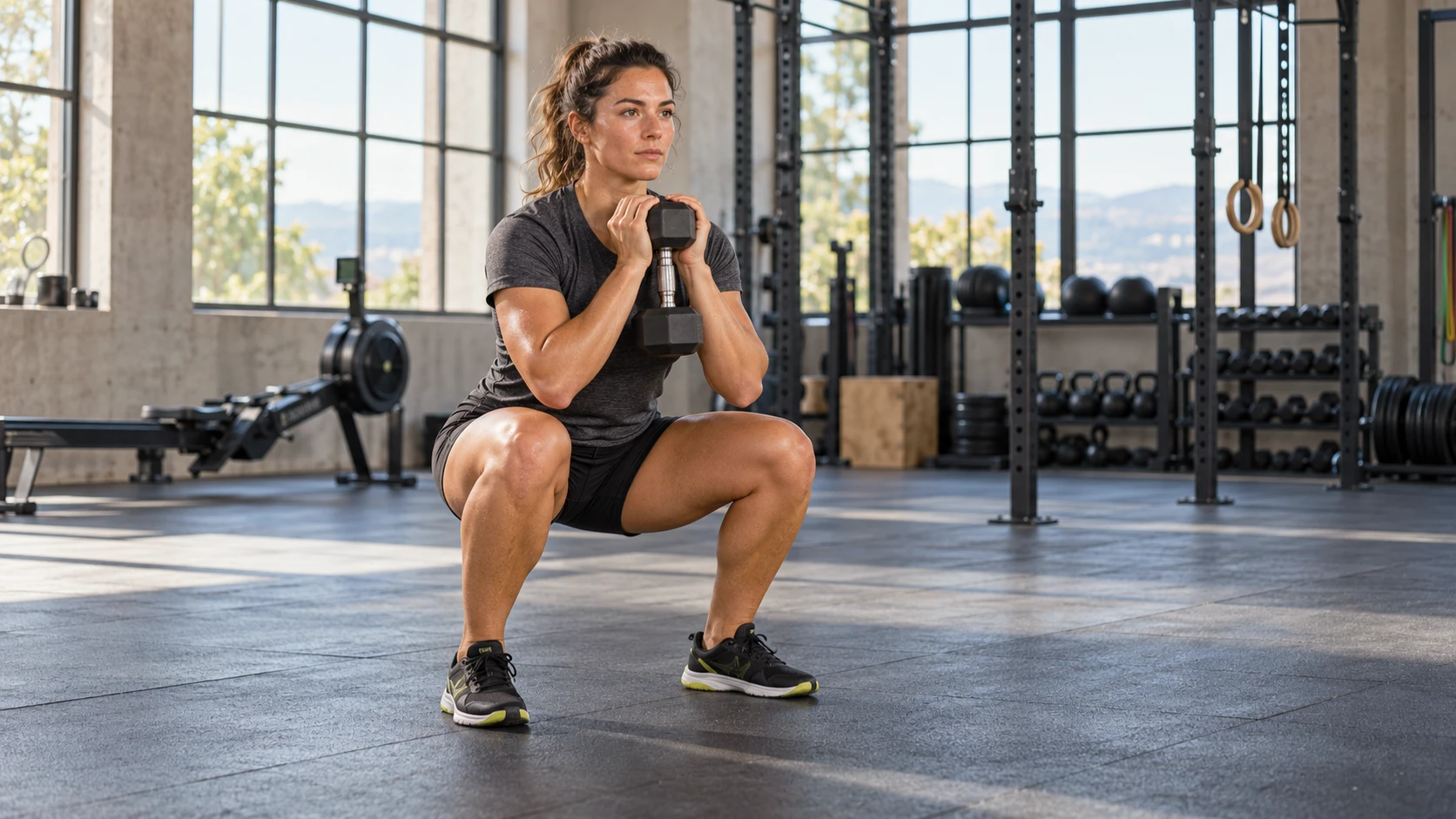
How little lifting can you do and still make progress? For athletes preparing for HYROX or hybrid racing, the useful answer starts with another question: are you trying to build strength, maintain it or support your running?
A Women’s Health feature explores those distinctions with certified personal trainers Tina Tang, founder of Iron Strong Fitness, and Natalya Vasquez, founder of On Your Terms Coaching. Their advice offers a framework for strength training, rather than a race-specific prescription. The central message is practical: a manageable commitment can produce results, but the minimum changes with your experience and ambitions.
Start with the goal, not the smallest number
The US Centers for Disease Control and Prevention recommends muscle-strengthening activity on at least two days each week for general health. That is different from identifying the smallest dose capable of improving a particular exercise.
Women’s Health cites research in BMC Sports Science, Medicine and Rehabilitation in which beginners progressed with one resistance-training session a week. Crucially, the study examined only the leg press. It should not be read as evidence that one weekly session covers every strength requirement of hybrid racing.
For beginners seeking whole-body strength and muscle development, Vasquez recommends two or three sessions on nonconsecutive days. Tang says those workouts can initially last just 15–20 minutes, increasing towards 45–60 minutes as endurance develops. Starting small does not mean staying at the same workload indefinitely.
- Build strength as a beginner: two or three nonconsecutive sessions, using full-body workouts or a three-day split organised by muscle group.
- Keep progressing as an established lifter: three sessions, typically lasting 30–60 minutes depending on intensity and volume.
- Maintain existing gains: one full-body session may be a bare minimum for a long-term lifter, although two or three remains the trainers’ preferred range.
- Support running: at least two strength sessions, with attention to foundational movements, single-leg work, core stability and hip strength.
Weekly volume matters alongside frequency
Counting gym visits only tells part of the story. A 2021 review in Sports Medicine, cited by Women’s Health, concluded that gains were possible across one to four training days a week when participants completed at least four sets of six to 15 repetitions per muscle group each week.
That finding puts the work completed across the week into focus, rather than making one session count compulsory for everyone. Tang also stresses progressive overload: gradually increasing weight, sets or repetitions to keep challenging muscles as they adapt.
For beginner full-body sessions, Vasquez suggests one exercise per muscle group, performed for three to five sets of five to eight repetitions. Dumbbells and resistance bands can provide a starting point without complicated equipment.
For a hybrid athlete, the important distinction is between maintaining strength and developing it. The reduced schedule suggested for an experienced lifter protecting existing gains is not the same recommendation as the schedule for someone seeking continued improvement.
Use the running guidance without overstating it
Tang recommends that runners use one session for bilateral foundational movements and another for unilateral exercises, core stability and hip strength. Vasquez suggests sessions of 30–60 minutes, with heavier sets of five to eight repetitions for more experienced lifters, or lighter sets of 12–20 for runners newer to resistance training.
The feature also cites a 2024 Sports Medicine meta-analysis reporting improved running economy with plyometrics and high-load strength training, defined as at least 80% of one-repetition maximum. Those findings concern runners, not a tested HYROX programme.
The practical takeaway is to choose a strength commitment that matches your current goal, then progress the work when further gains are the priority. Neither the smallest possible dose nor the busiest lifting schedule is a universal answer.
This feature draws on the trainer interviews and research summaries in Women’s Health. Its recommendations provide general strength-training guidance, rather than a validated minimum for hybrid-racing performance.

This story is based on reporting from the original source.