
Articles
Cameron Main’s backyard ultra: 228km for Abbie
Cameron Main’s backyard ultra ended after 34 laps and 228km, with the IRONMAN winner finishing eighth at Haydock Park. His effort raised nearly £3,000 for Abbie’s Sparkle Foundation. For hybrid athletes, his account highlights the demands of repeated restarts, the value of support and the limits imposed by painful feet.
By Relentless Bravery ·
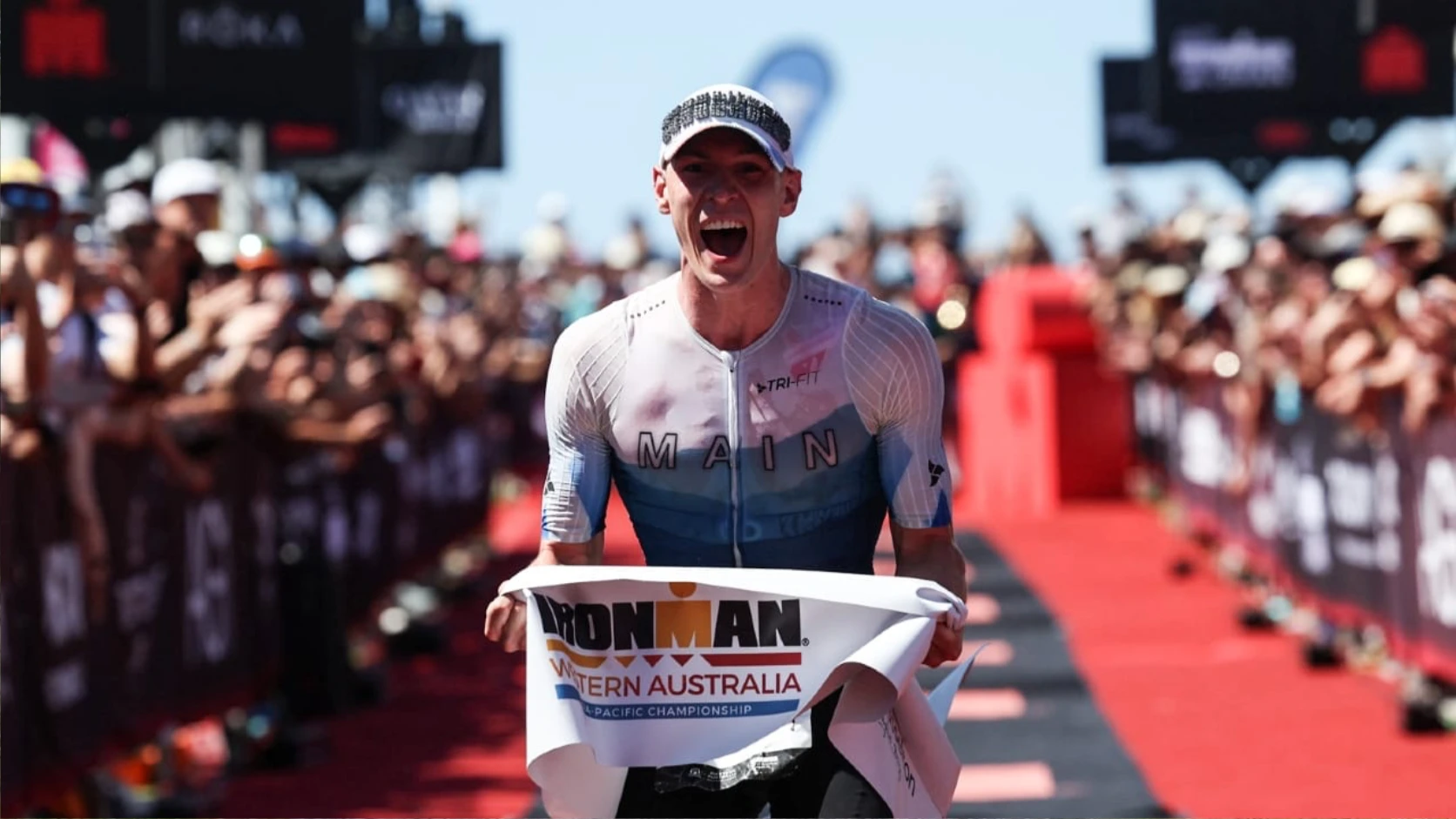
IRONMAN winner Cameron Main has completed 228km at the Red On Backyard Ultra, finishing eighth after almost 34 hours of running and repeated hourly restarts. The Scottish professional triathlete described the challenge as substantially harder than anything he had previously attempted.
Held at Haydock Park Racecourse in north-west England, the event also carried a personal purpose. Main was fundraising for Abbie’s Sparkle Foundation, the charity established by his sister before her death from cancer in 2017. Donations were approaching £3,000 when TRI247 published its report on 2 November 2026.
What happened in Cameron Main’s backyard ultra?
Main arrived with considerable endurance credentials. He had won IRONMAN Western Australia on his full-distance debut in December 2025 and raced at the IRONMAN World Championship in Kona during October. Haydock Park nevertheless presented a different problem from combining swimming, cycling and running.
In a backyard ultra, competitors start a 4.167-mile loop on the hour, every hour. Whatever remains of that hour after finishing is available for eating, resting and preparing for the next start. Completing one loop therefore brings only a temporary pause: the next departure is already fixed.
- 34 completed loops, known as yards, for approximately 228km.
- Eighth place in the final results after almost 34 hours.
- A final loop that took him beyond an entire IRONMAN’s combined distance.
- An initial £1,000 fundraising target, with donations approaching £3,000.
His feet became the decisive limitation around yard 32. By the following lap, Main had decided he would stop if he could reach the finish within the hour. Afterwards, he reported swelling and bruising that left walking difficult.
His support crew — Harry, his mum and Sophie — continued changing his socks and putting his shoes back on while helping him consider another attempt. Main eventually completed one more 6.7km loop, moving from roughly 221.3km to 228km.
Race winner Aqeel Ahmed went considerably further, completing 63 yards. Kieron Day recorded 62 and received the result designation of an assist. Main subsequently expressed fresh admiration for competitors capable of continuing beyond 60 hours.
What can HYROX and hybrid athletes take from it?
The useful comparison is not the distance. Main’s account shows how the demands of a format can challenge an athlete whose endurance credentials are already established. Winning an IRONMAN did not make repeated hourly running starts straightforward, and he identified sore feet as the factor that ultimately restricted him.
For athletes preparing for HYROX or another hybrid race, that distinction matters: an impressive result in one discipline does not settle every question about readiness for another. This was an individual race experience, not evidence that ultra-distance running improves hybrid performance or that athletes should add similar mileage to their preparation.
The crew’s contribution was also specific rather than abstract. They handled socks and shoes and helped Main reconsider the immediate task. His account puts practical assistance alongside encouragement, rather than presenting the final loop as an achievement made entirely alone.
That does not make painful running a training prescription. The reported swelling, bruising and difficulty walking belong in the story alongside the distance and fundraising total. Hybrid athletes can recognise the commitment without treating his final restart as a rule to follow whenever a session hurts.
After sleeping, Main returned to Haydock Park to support competitors still running, extending his involvement beyond his own finish.
Reporting is based on Jonathan Turner’s article for TRI247, which includes Main’s post-race reflections, the event results and the fundraising update for Abbie’s Sparkle Foundation.
+How far did Cameron Main run at the Red On Backyard Ultra?
+Which charity did Cameron Main support?
+How should hybrid athletes scale running rather than copy this challenge?
Tagged