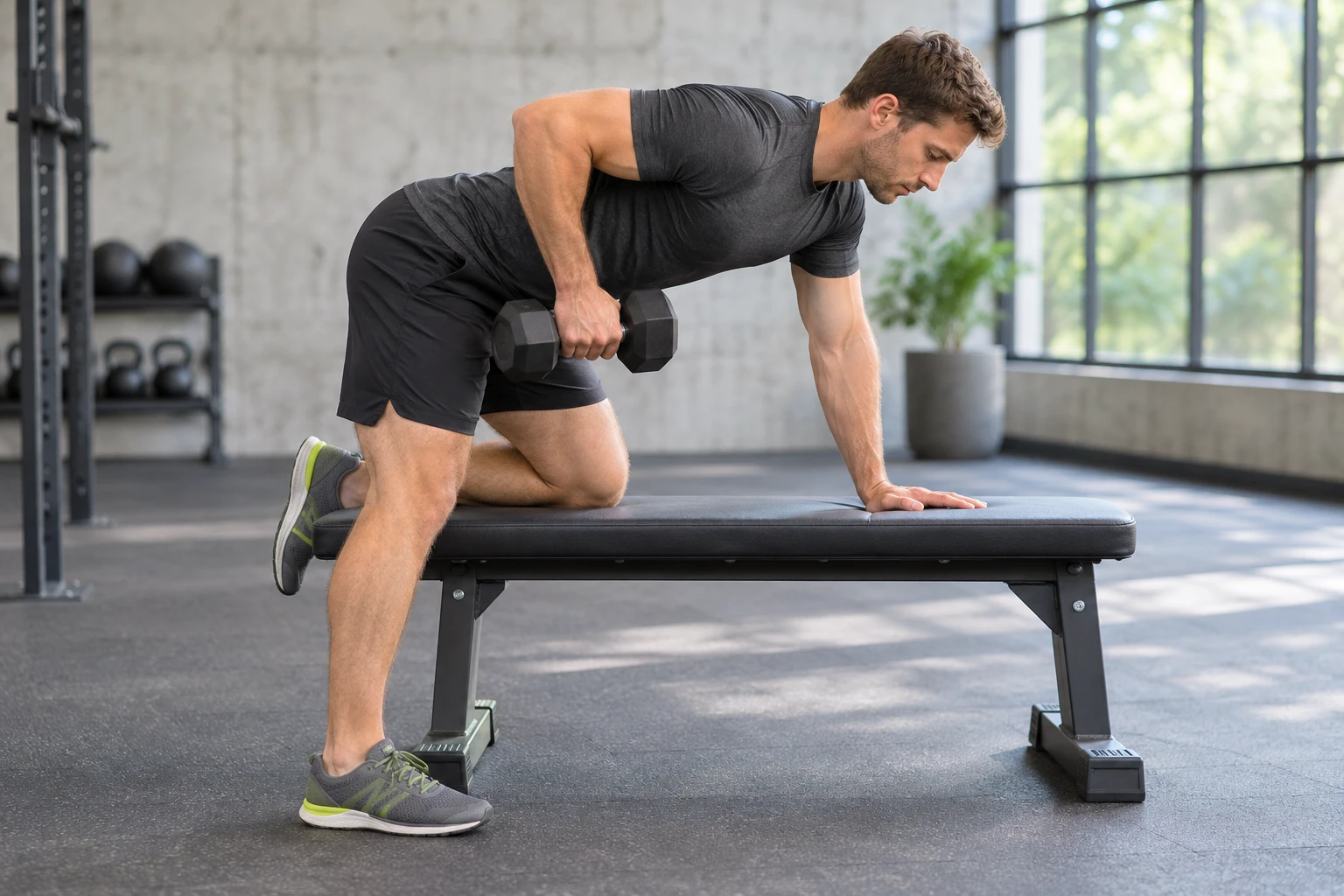
Unilateral training uses one limb at a time, or places most of the work on one side, rather than loading both sides equally. Examples include step-ups, split squats and single-arm rows. Athletes use it to develop strength, practise control and identify side-to-side differences that bilateral exercises may conceal.
Definition
Unilateral training describes exercises performed with one limb at a time, or with a clear loading emphasis on one limb. It contrasts with bilateral training, where both limbs contribute together, as in a conventional squat or barbell bench press.
Why it matters
Running and lunging involve repeated work through individual legs. Training each side separately lets athletes practise producing and controlling force without always relying on the opposite side to assist. It can also reveal differences in strength, balance or movement skill, although a difference alone does not establish an injury or medical problem.
Deeper explanation
Unilateral does not mean that only one muscle or one side of the body is active. A single-arm row still requires trunk and shoulder control; a single-leg squat also involves the foot, ankle and hip. Exercise setup matters: a supported split squat can challenge leg strength with relatively little balance demand, while an unsupported single-leg movement may be limited by coordination before the target muscles become heavily fatigued.
How to programme it
Choose an exercise that matches the intended adaptation. For strength work, use support if balance prevents meaningful loading. Record repetitions per side and keep technique, range and assistance consistent. Progress load, repetitions or range gradually rather than increasing every variable together. Unilateral work can complement bilateral lifts rather than replacing them.
In HYROX and hybrid racing
HYROX sandbag lunges alternate the lead leg, making unilateral-emphasis leg strength and control relevant. Split squats and step-ups can support that preparation, but they do not replace practising the race movement. Running also requires repeated single-leg support, although improvements in a gym exercise do not automatically translate into faster running.
FAQs
+Are split squats unilateral if both feet stay on the floor?
They are commonly classed as unilateral training because the front leg takes most of the work. More precisely, they are unilateral-emphasis exercises: the rear leg still provides support and can contribute force.
+Should unilateral training replace bilateral lifting?
Not automatically. Bilateral exercises suit developing strength with both limbs working together, while unilateral exercises provide a different loading and coordination challenge. Many programmes benefit from including both.
+Should I do extra repetitions on my weaker side?
Not by default. Start with the less capable side and use the same load and number of controlled repetitions on the other side. Persistent, substantial or painful differences warrant assessment rather than simply adding more work.
Also known as: single-limb training, one-sided training
How does unilateral training work in practice?
A single-arm press is a straightforward example: one arm performs the pressing action while the rest of the body stabilises. Lower-body examples sit on a spectrum, from a genuinely single-leg squat to a split squat with rear-foot support.
How should you scale each movement?
Step-up: choose a lower, stable platform and remove external load. Place the whole working foot on the surface and control the descent.
Split squat: begin with bodyweight, hold a stable support and reduce depth if needed to maintain a controlled, comfortable movement.
Single-leg Romanian deadlift: use light hand support or a kickstand stance, with the rear toes assisting balance. Shorten the hinge before adding weight.
Single-arm row: support the free hand on a stable bench and reduce the load if the trunk repeatedly twists to complete the pull.
When should you stop a set?
End the set when you can no longer maintain the intended position, repeatedly lose balance or need increasing assistance to finish repetitions. Stop the exercise for sharp or worsening pain, dizziness or a joint giving way. Do not push through these symptoms; seek qualified advice if they persist or recur.
What should you track?
Log load, repetitions per side, range of motion and any support used. Compare sessions under similar conditions: a supported repetition and an unsupported repetition are different tasks. Prioritise repeatable control over making the exercise look more difficult.